
The Prince of Wales Theatre, Broad Street, Birmingham
Formerly - The Birmingham Music Hall / Royal Music Hall / Prince of Wales Operetta House
Birmingham Index

Above - The Prince Of Wales Theatre, Birmingham From a Programme for 'The Terror' on March 11th 1929.

 The
Prince of Wales Theatre was situated on Broad Street, Birmingham and constructed at a cost
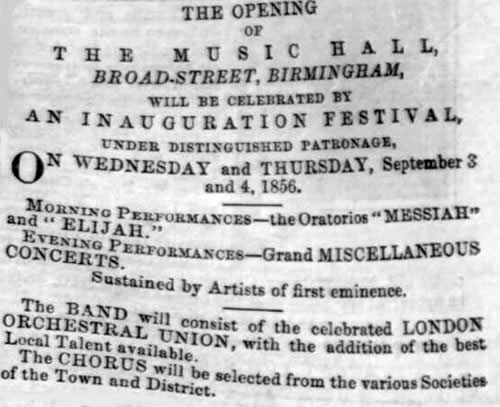
of £12,000. The Theatre originally opened on the 3rd of September 1856 as The Music Hall, Broad Street, with a production of 'The Messiah' and 'Elijah, see advertisement shown right.
The
Prince of Wales Theatre was situated on Broad Street, Birmingham and constructed at a cost
of £12,000. The Theatre originally opened on the 3rd of September 1856 as The Music Hall, Broad Street, with a production of 'The Messiah' and 'Elijah, see advertisement shown right.
Right - An Advertisement for the forthcoming opening of the Music hall, Broad Street, Birmingham in September 1856 - From Aris's Birmingham Gazette, 14th of July 1856, this was published in various publications of the time.
The Music Hall was said to have been 'likely to be a most popular place of amusement in the town' by the local press of the time, and indeed it was advertised copiously in the press as being home to all manner of events including Orchestral Concerts, Dioramas, Painting Displays, Burlesques, Operas and Ballads etc., even a tour up the river Ganges in an Indian Diorama billed as 'the largest ever painted' with music by Buffo Singer and pianist Henry Smith.
 Later renamed the Royal Music Hall it went on in this vein until it was eventually taken over from its original
owner, James Scott, in 1862 by William Henry Swanborough of the Royal Strand Theatre in London, and was Licenced for Theatrical
Later renamed the Royal Music Hall it went on in this vein until it was eventually taken over from its original
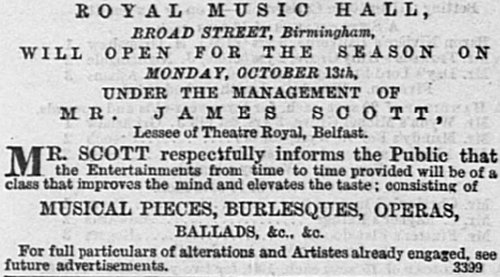
owner, James Scott, in 1862 by William Henry Swanborough of the Royal Strand Theatre in London, and was Licenced for Theatrical  Performances.
Left - An Advertisement for the Royal Music Hall, Birmingham in 1862 - From the Birmingham Journal, 4th of October 1862.
On the 10th of March 1863 the building was renamed the Prince of Wales Operetta House in commemoration of the marriage of the then Prince of Wales, Edward the VII, to Princess Alexandra. However, the Operetta House part of the name was dropped a couple of years later in 1865 when the name became the simpler Prince of Wales Theatre.
Right - An early Programme for Wilson Barrett's Company performing 'Old Love and the New!' at the Prince of Wales Theatre, Birmingham in September 1880.

Above - The Procenium and Curtain of the Prince of Wales Theatre, Birmingham in 1901 - Courtesy Iain Wotherspoon.

Above - The Auditorium from the Stage of the Prince of Wales Theatre, Birmingham in 1901 - From 'The Playgoer' 1901 - Courtesy Iain Wotherspoon.

Above - The Proscenium, Stage, and some of the Boxes of the Prince of Wales Theatre, Birmingham in 1929 - From a 1929 Programme.
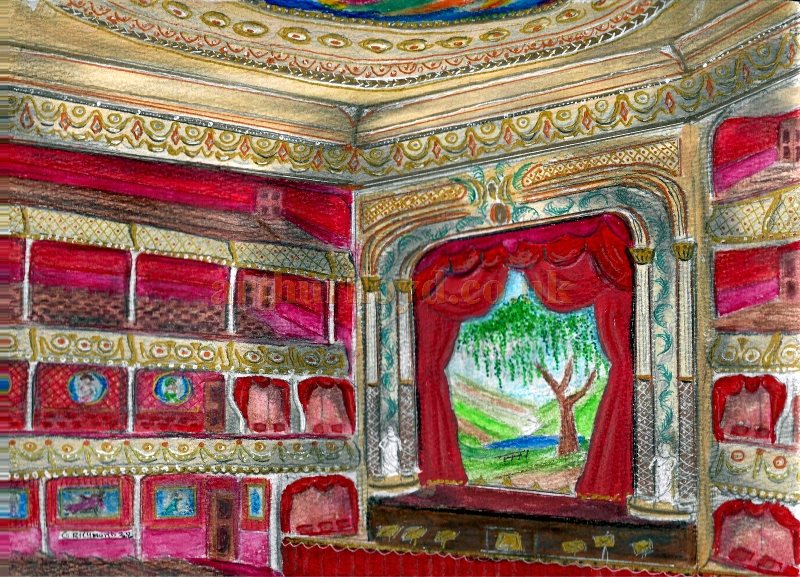
Above - A Painting by George Richmond depicting the Prince of Wales Theatre, Birmingham in 1865. George says:- 'I have recreated the interior from the auditorium, no image of this exists I dare to say up to now. I took the angle of the whole from the later modified pros, recreating the 1865 one from this using old photos and then I reinterpreted the auditorium using the photo showing it from the stage (left), the whole is now seen from audience right. The colours are not given so I have used the traditional reds in the auditorium. The stage shows an old type drop cloth in the photo so I have attempted my interpretation of this.' - Click for an Index to all of George Richmond's Paintings on this site.
 James
Rodgers took over the Theatre in 1866 and set about enlarging and enhancing the building, and later on his
son too refurbished the building before selling it in 1898.
James
Rodgers took over the Theatre in 1866 and set about enlarging and enhancing the building, and later on his
son too refurbished the building before selling it in 1898.
Right and Below Left - The Saloon and Tea Room of the Prince of Wales Theatre, Birmingham - From a 1929 Programme.
 A tragic accident happened at the Theatre in 1908 when a Stage Carpenter's assistant who had worked there for 20 years, 40 year old William Brunt, died from a fall whilst working on constructing a wooden platform for painting the Theatre's Proscenium. He fell 35 feet to his death and was survived by his wife and five children, the youngest of which was just two at the time
  and later would become the Grandmother of Helen Stone who kindly sent in this information.
Right - The Vestibule of the Prince of Wales Theatre, Birmingham - From a 1929 Programme.
The Theatre was managed by the actor J. F. Graham from 1898 until 1911 so the accident would have been on his watch so to speak. He was replaced in 1911 by Philip Rodway, who was formerly the managing director of the Theatre Royal, Birmingham, and he would continue running the Prince of Wales Theatre until his death in 1932.
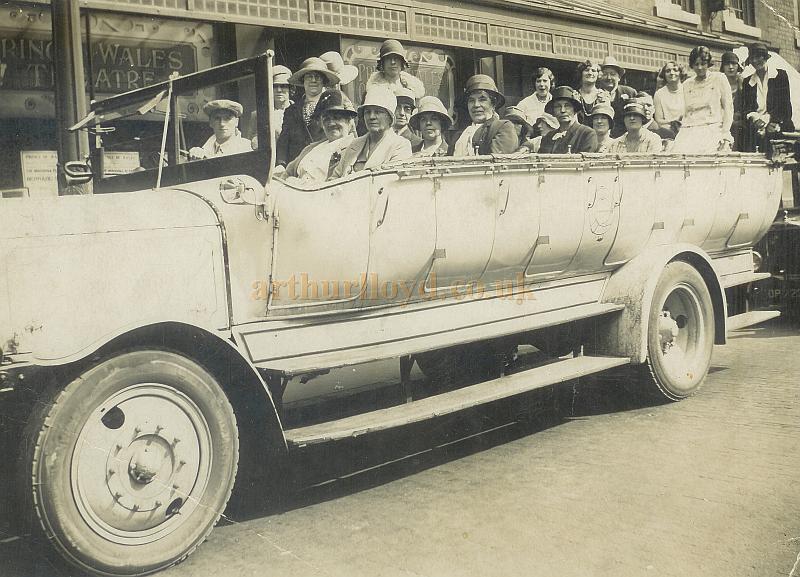 The Staff of the Prince of Wales Theatre, Birmingham in a photograph taken outside the Theatre just before setting off on a day trip in the late 1920s - Courtesy Derek Hayes, whose Grandparents worked at the Theatre. Derek writes: 'The lady sitting in the seats second row back on the charabanc closest to the camera is my great-grandmother, Mary-Anne Diggs. My grandmother, Albina Roe (nee Diggs), can be seen in profile two faces behind her mother. I know that Albina was aged 5 and Mary-Anne was aged 44 in 1911 so I guess this picture was taken about 15 years after in about 1926.'
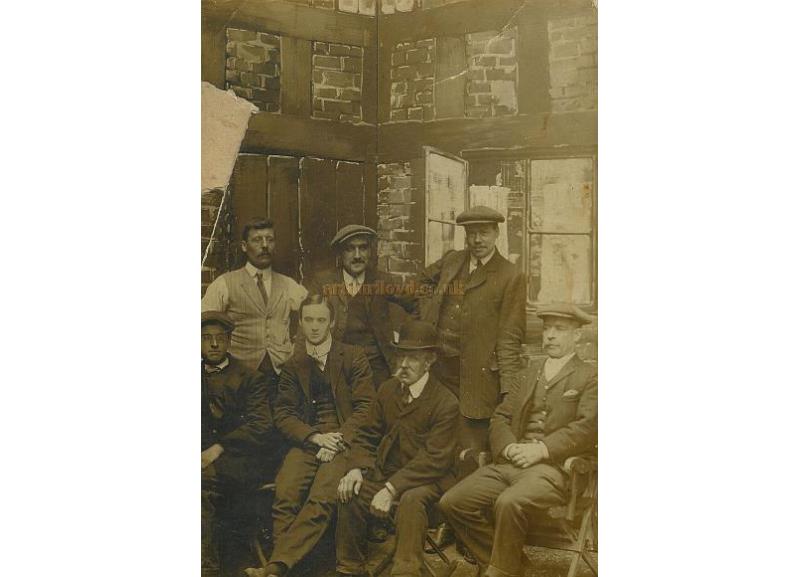 The Staff of the Prince of Wales Theatre, Birmingham in a photograph taken on stage at the Theatre - Courtesy Derek Hayes, whose Grandparents worked at the Theatre. Derek writes: 'I'm told that my great-grandfather, John Diggs, is shown in the picture, I'm not too sure which one he is, but the tallest guy at the back looks very familiar. He was aged 66 in 1911 (artist by trade), so I guess this picture was taken sometime earlier than that, unless he's the old chap at the front.'
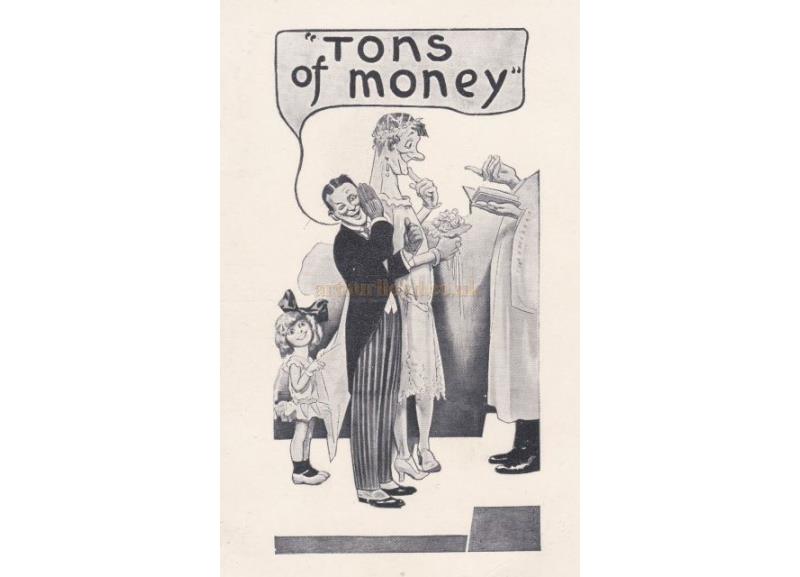 The Front of an Advertising Postcard for the touring version of the farce 'Tons of Money' which was at the Prince of Wales Theatre, Birmingham for the week of May 29th 1933 - Courtesy John Francis Place.
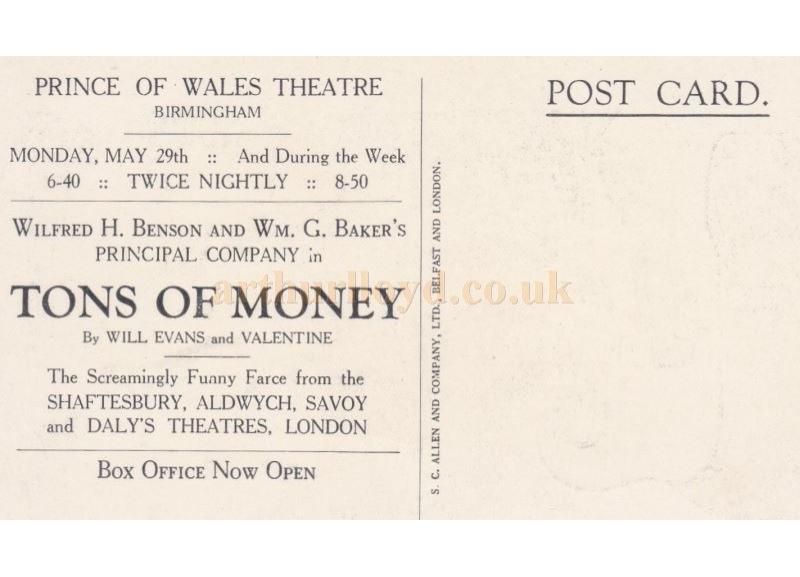 The Back of an Advertising Postcard for the touring version of the farce 'Tons of Money' which was at the Prince of Wales Theatre, Birmingham for the week of May 29th 1933 - Courtesy John Francis Place.


Above - Some Interesting Early Images for the Prince of Wales Theatre, Birmingham.
Emile Littler's Pantomimes at the Prince of Wales Theatre, Birmingham in the 1930s and Later History
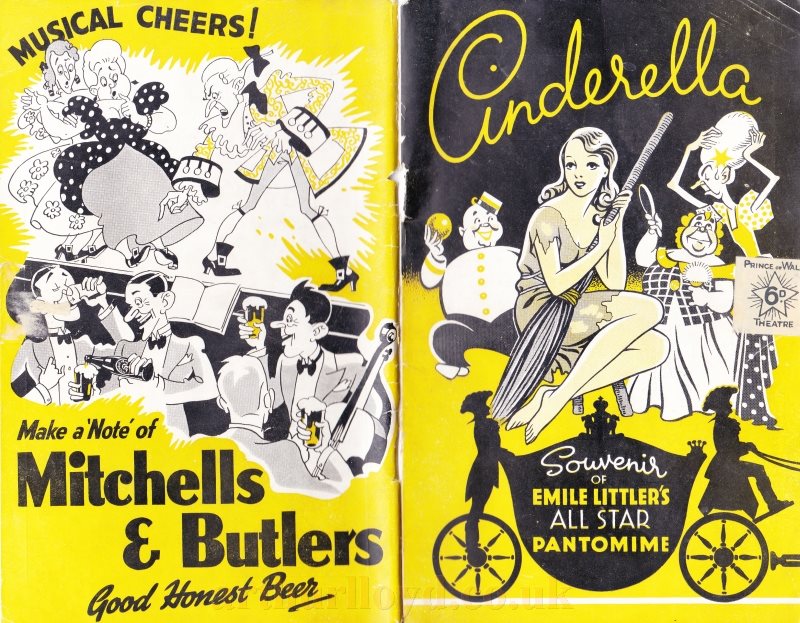
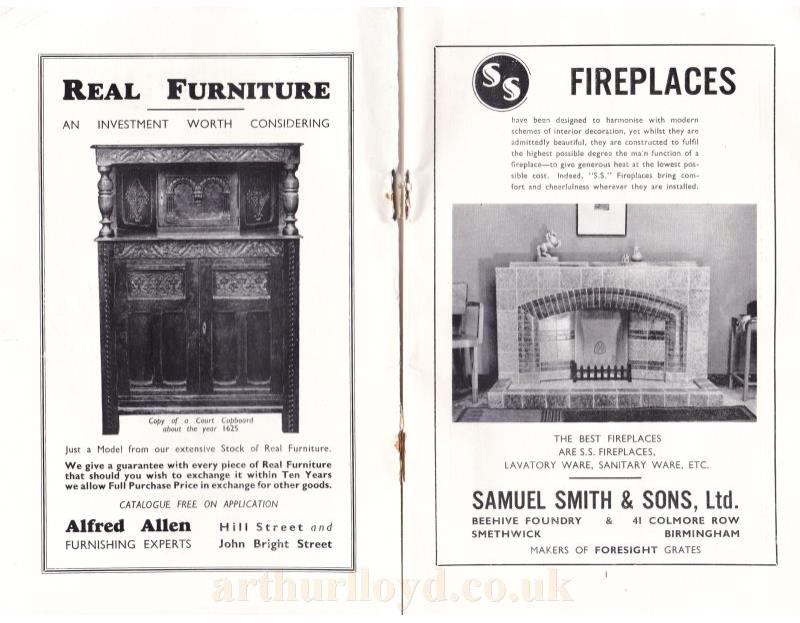
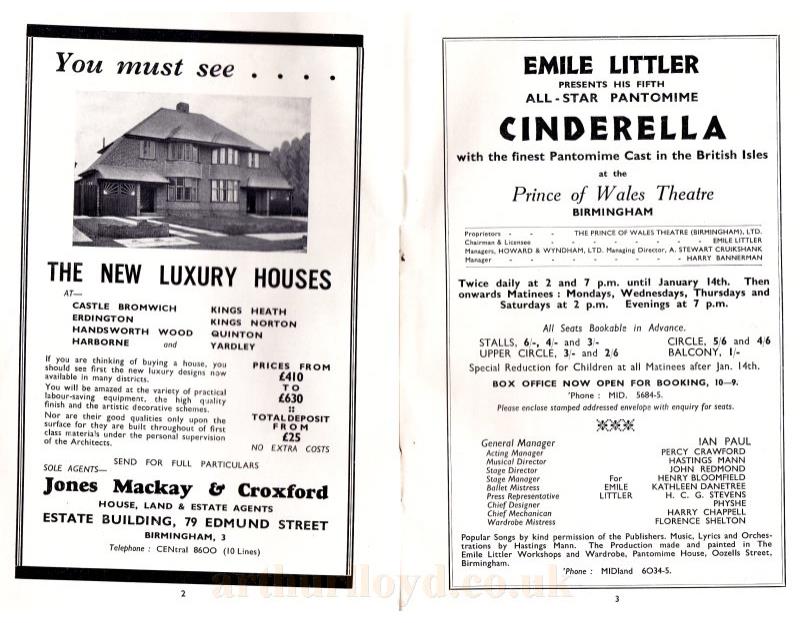
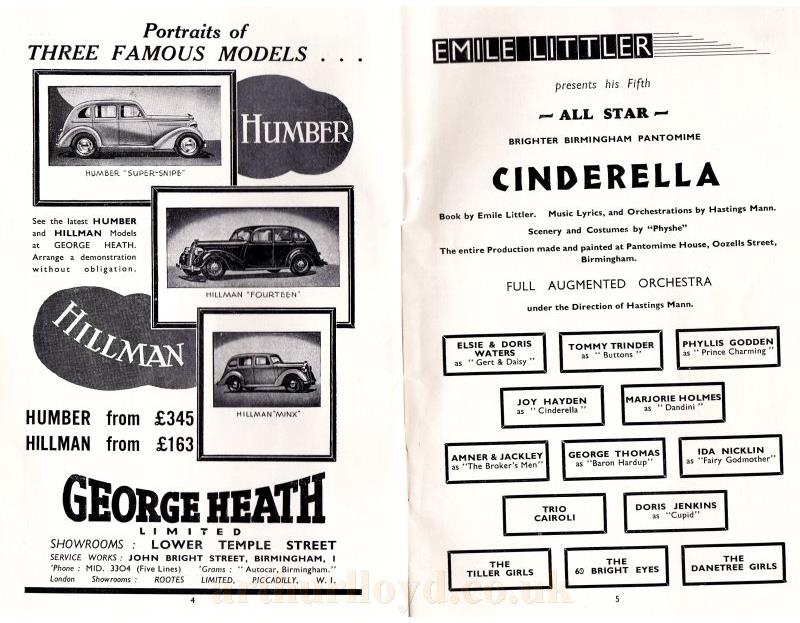
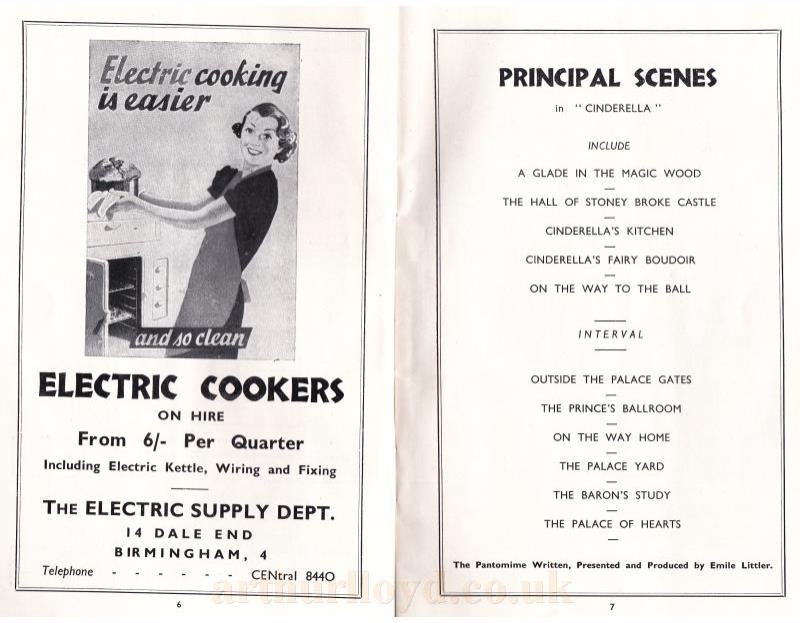
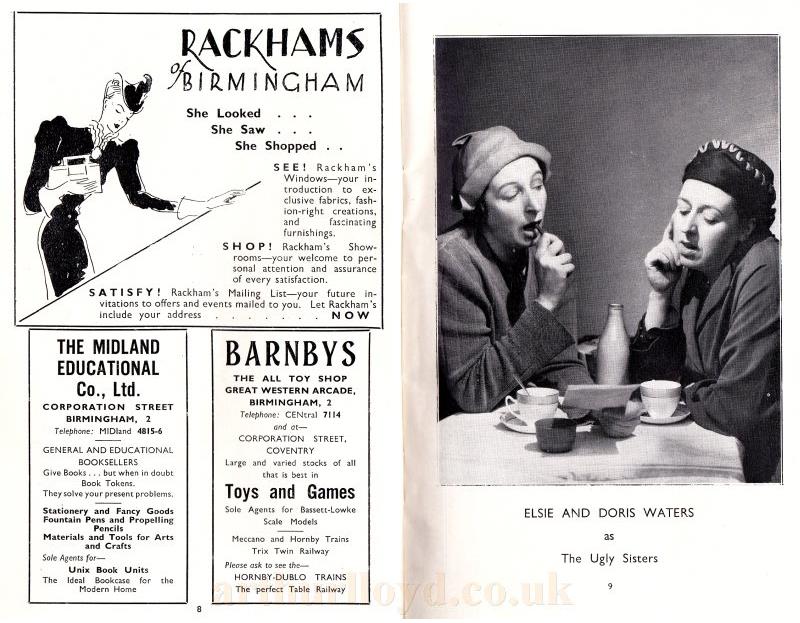

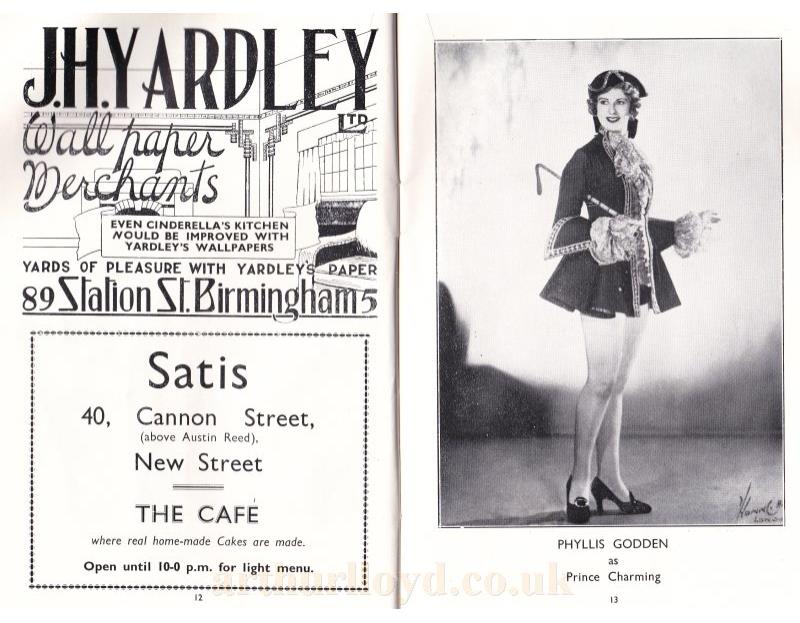
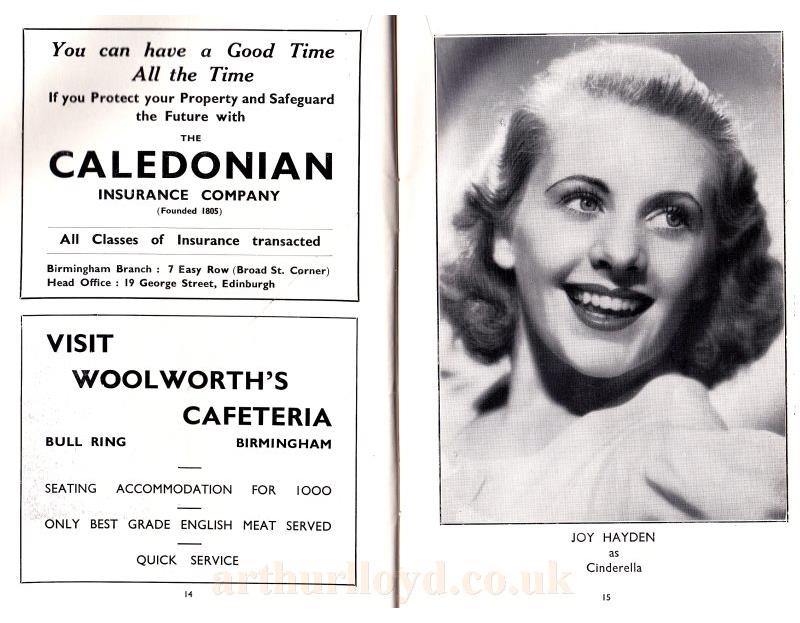
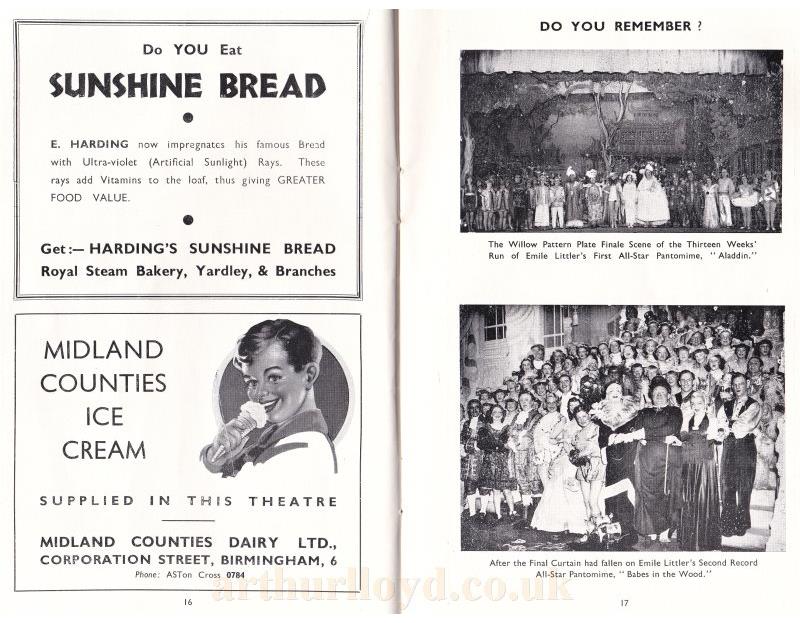
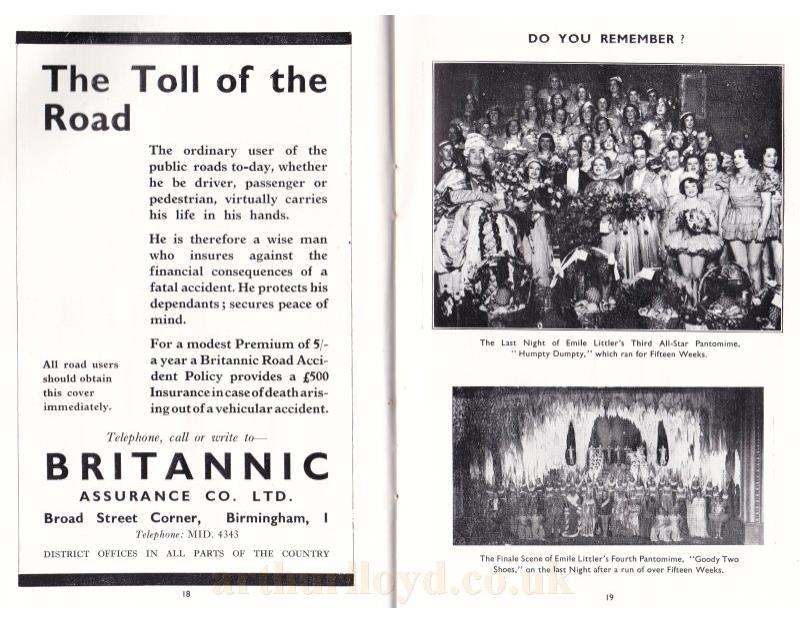
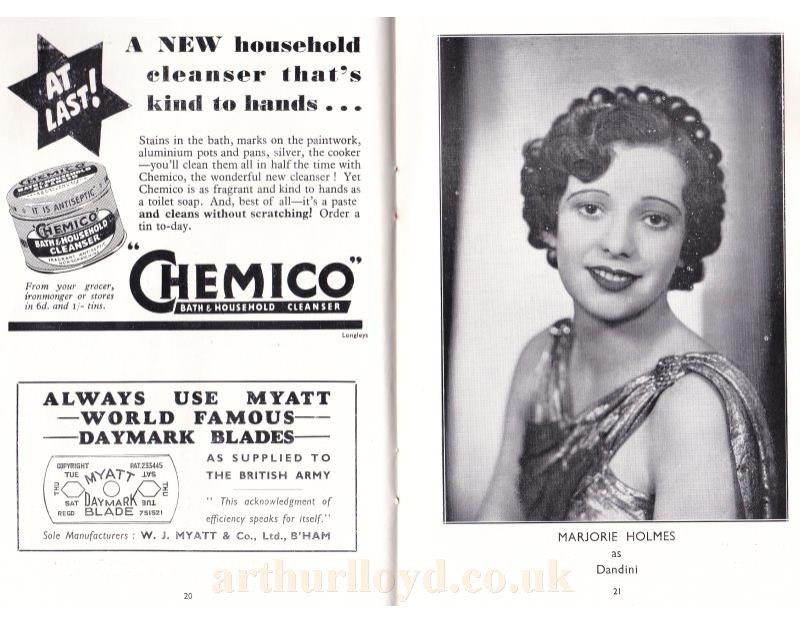
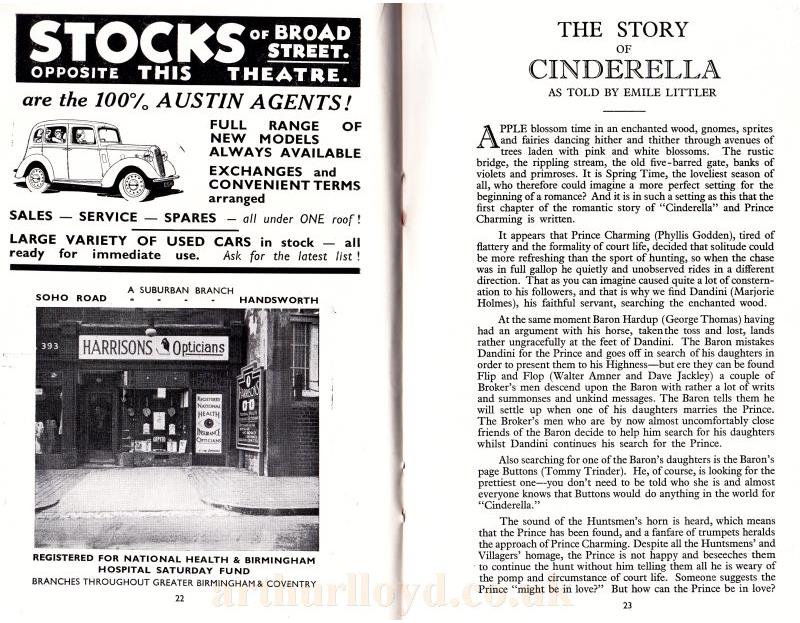

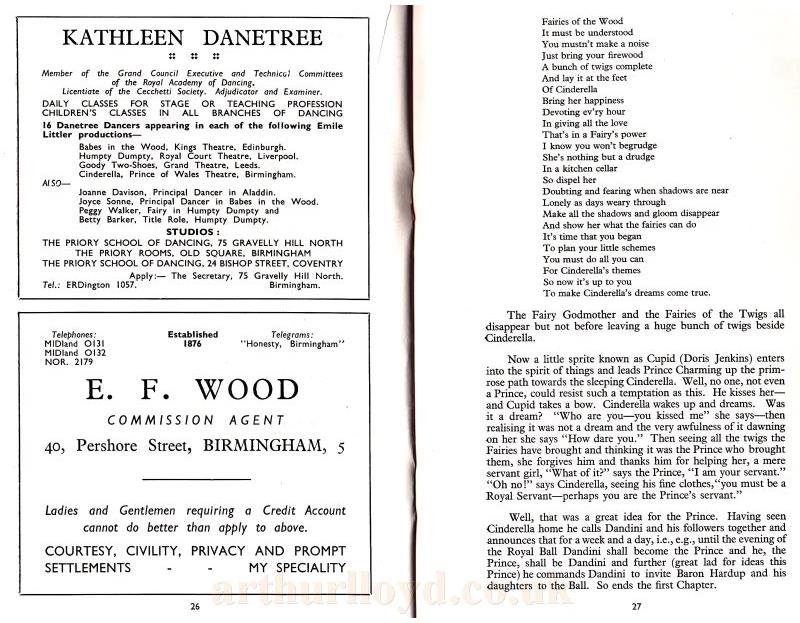
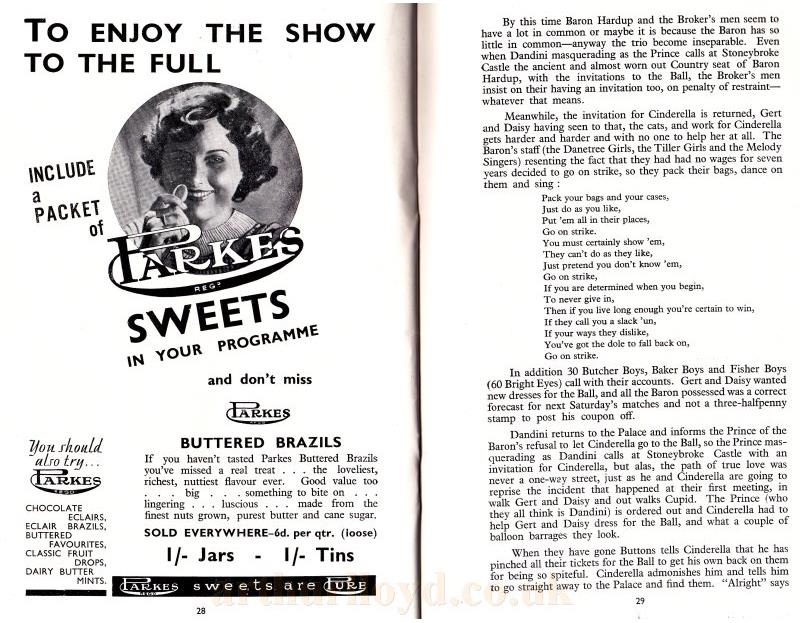
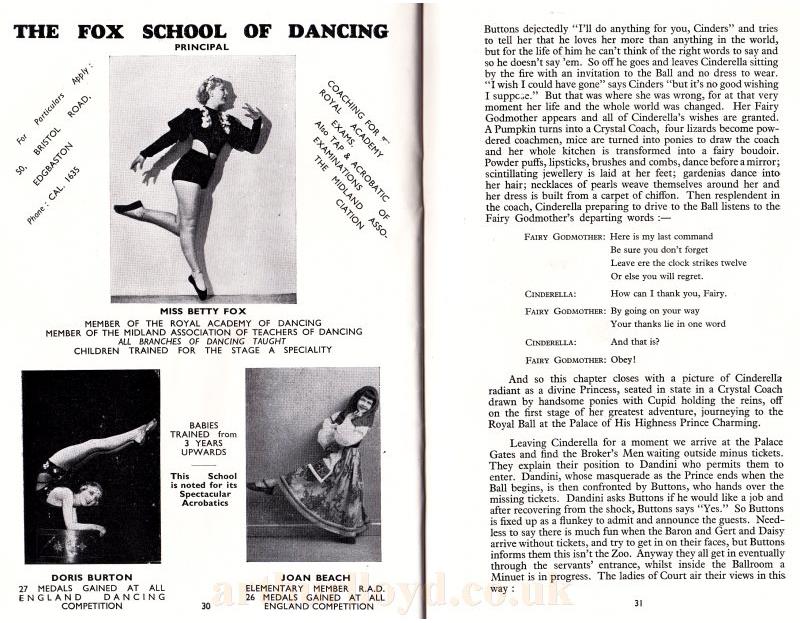

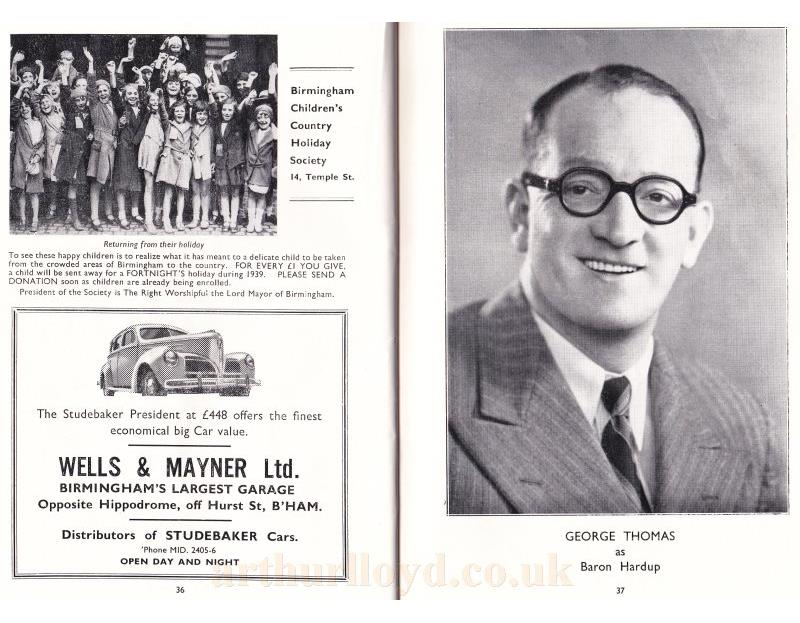
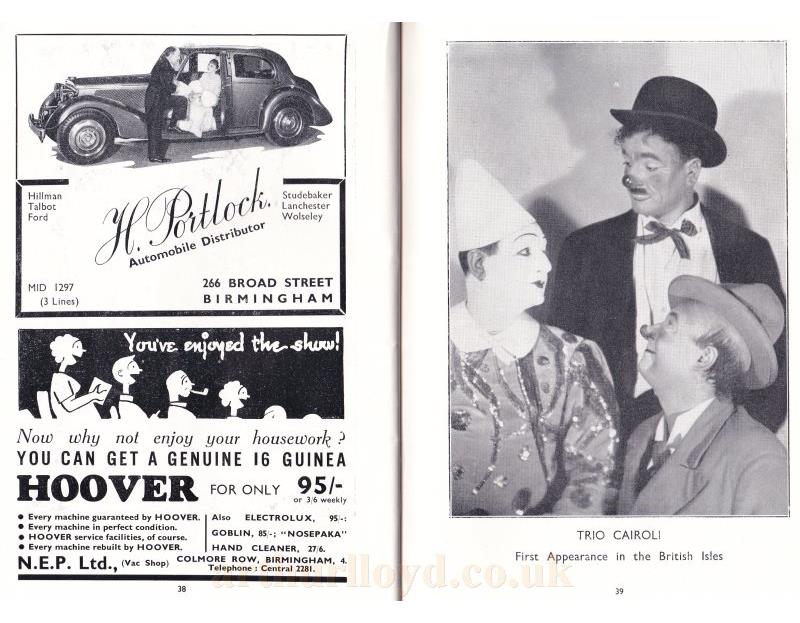
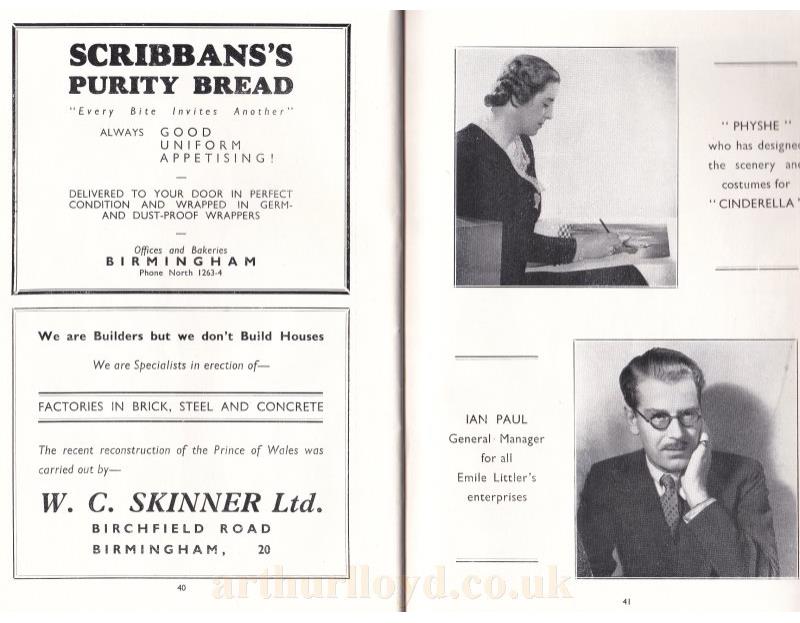
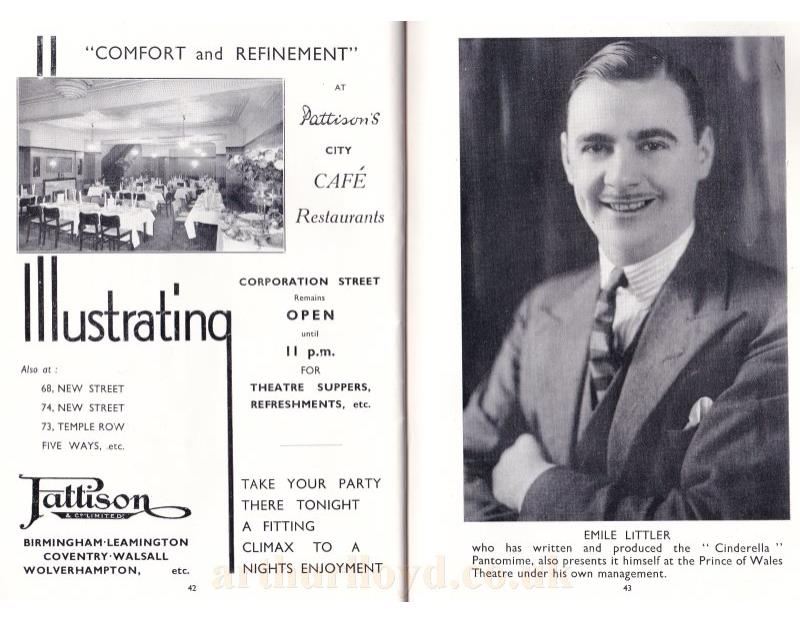

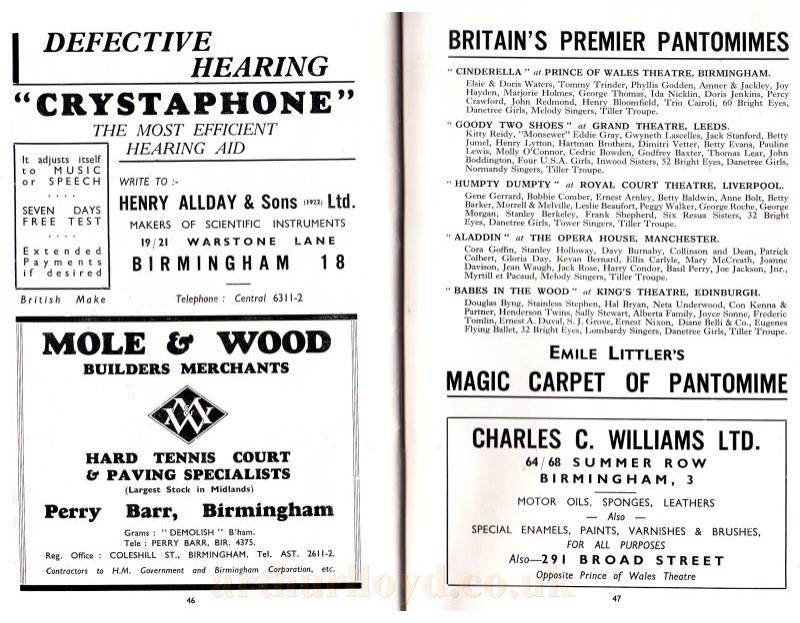
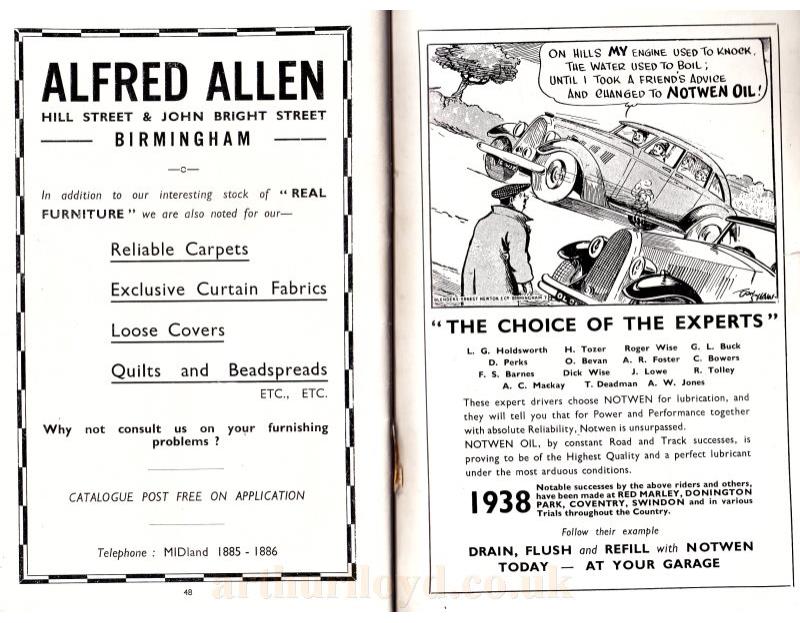


Above - A Copiously Illustrated 50 page Programme for Emile Littler's fifth Pantomime Production 'Cinderella' at the Prince of Wales Theatre, Birmingham for Christmas 1938/39 Kindly donated by Julian Cook. In the cast were Tommy Trinder, Elsie & Doris Waters, Phyllis Godden, Joy Hayden, Marjorie Holmes, Amner & Jackley, George Thomas, Ida Nicklen, Trio Cairoli, Doris Jenkins, The Tiller Girls, The Bright Eyes, and The Danetree Girls. In the programme are also photos of the first four of Emile Littler's Pantomines at the Theatre.
 Emile
Littler became a director of the Theatre in 1935 and put on several Pantomimes there in an attempt to revive
the Theatre's fortunes including his fifth, the 1938/39 'Cinderella' Pantomime, a programme for which is shown in full above.
Emile
Littler became a director of the Theatre in 1935 and put on several Pantomimes there in an attempt to revive
the Theatre's fortunes including his fifth, the 1938/39 'Cinderella' Pantomime, a programme for which is shown in full above.
Right - A Programme for 'Crusoe's Adventures' at the Prince of Wales Theatre, Broad Street, Birmingham for Monday December 24th 1906 - Click for details.
 The Prince of Wales Theatre was a casualty of one of the
first air raids over Birmingham when it took a direct hit on the 9th
of April 1941, completely destroying the auditorium and interior.
The Prince of Wales Theatre was a casualty of one of the
first air raids over Birmingham when it took a direct hit on the 9th
of April 1941, completely destroying the auditorium and interior.
Left - A Programme for 'The Terror' at the Prince of Wales Theatre, Birmingham on March 11th 1929. The images of the Theatre on this page come from this programme.
The building remained in this state but never reopened and was eventually demolished in 1987 to make way for its replacement, the New Birmingham Symphony Hall which opened in 1991.
If you have any more information or images for this Theatre that you are willing to share, please Contact me.
An Ashtray featuring Dorothy Ward at the Prince of Wales Theatre, Birmingham

Above - An Ashtray with a photo of Dorothy Ward under glass in the centre and embossed lettering around the edge which reads 'DOROTHY WARD, PRINCE OF WALES THEATRE BIRMINGHAM.' - Courtesy John Dutton.
 On the back of the Ashtray is writing in ink which appears
to read 'feb 23/10. Miss Dorothy Ward,' and further writing which is
hard to read 'Beautiful Thomas' perhaps. John Dutton, whose Ashtray
is shown here, says "I am curious to know further information.
Did Dorothy perform in Babes at the theatre in 1910? And is this a one
off ash tray or were others made?"
On the back of the Ashtray is writing in ink which appears
to read 'feb 23/10. Miss Dorothy Ward,' and further writing which is
hard to read 'Beautiful Thomas' perhaps. John Dutton, whose Ashtray
is shown here, says "I am curious to know further information.
Did Dorothy perform in Babes at the theatre in 1910? And is this a one
off ash tray or were others made?"
Right - An Ashtray with a photo of Dorothy Ward under glass in the centre and embossed lettering around the edge which reads 'DOROTHY WARD, PRINCE OF WALES THEATRE BIRMINGHAM.' - Courtesy John Dutton.
A visitor to the site, David Hartshorne, who is a nephew of Dorothy Ward, has sent in some information about the ashtray saying that it does indeed refer to Dorothy Ward's appearance in 'Babes in the Wood' at the Theatre in 1909/10.
Another visitor to the site, Tony Smith, says 'The ash tray was made in Birmingham for the grand opening of the Prince of Wales Theatre in 1909. I found a copy of the ash tray in the archives of a company called Baller and Mantle LTD., when I was helping to clear the building in 2007. I'm not sure but I think Baller and Mantle may have made the ashtrays (the one I have is in very good condition) for the Theatre as mementos for Theatre goers.'
Another visitor to the site, John Dawson, says he also has one of these Ashtrays, albeit in a poor state, so they seem to be quite common even today.
If you have any more information about the ashtray please Contact me.