
The Palace Theatre of Varieties, Percy Street and Haymarket, Newcastle
Formerly - The Percy Hall / The People's Palace
Also see: Newcastle Theatre - A personal reminiscence by Donald Auty - Pantomimes in Newcastle 50 Years Ago by Donald Auty - Moss Empires' Theatres in the Fifties by Donald Auty
Newcastle Index

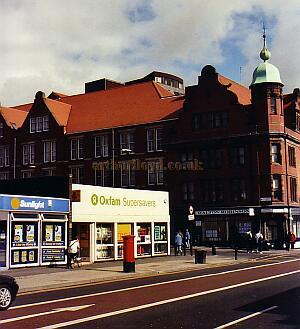
Above - The Palace Theatre, Newcastle, which was originally built in 1895 but shown here with its 1950 altered Facade - Courtesy Gareth Price. The Theatre's Original Facade can be seen below.

 The
Palace Theatre first opened on Monday the 23rd of December 1895 with Thomas Barrasford as its Manager. The Theatre was designed
by the Newcastle architect J. W. Taylor and was a reconstruction of the
former People's Palace which had been opened firstly as the Percy Hall in 1888, and later run by Horace Livermore of the Livermore Brothers. In 1890 it had become a religious establishment, but in 1895 Taylor enlarged and altered the hall and it was renamed the Palace Theatre for its reopening on Monday
the 23rd of December 1895.
The
Palace Theatre first opened on Monday the 23rd of December 1895 with Thomas Barrasford as its Manager. The Theatre was designed
by the Newcastle architect J. W. Taylor and was a reconstruction of the
former People's Palace which had been opened firstly as the Percy Hall in 1888, and later run by Horace Livermore of the Livermore Brothers. In 1890 it had become a religious establishment, but in 1895 Taylor enlarged and altered the hall and it was renamed the Palace Theatre for its reopening on Monday
the 23rd of December 1895.
Right - The Site of The Palace Theatre, Haymarket in 2003 - Courtesy Gareth Price.
The new Palace Theatre had an auditorium built on three levels, stalls and pit, and two circles, along with four boxes and accommodation for what was stated in the ERA of the time to have been between 3,000 and 4,000 people.
The ERA carried a report on the new Theatre shortly after it opened in their 28th of December 1895 edition saying:- 'On Monday this theatre of varieties was opened to the public. The old People's Palace, situated in the Haymarket, was acquired by a commercial firm for an extension of their premises on the expiration of Messrs Livermore's lease; but a local syndicate having subsequently secured the property, the present commodious hall was built.
The changes that have taken place within the past eight weeks in the old barnlike hall say much for the activity of contractor and management. The interior was completely gutted, and the auditorium arranged on quite a new basis. The architect is Mr J. W. Taylor, F.R.I.R., of Newcastle. The floor is on a graduated slope, and provides ample accommodation for orchestra, stalls, and some eighteen benches in the pit. The stalls are fitted with " tip-up " seats, richly upholstered in dark crimson plush, with gold embellishments. Above, a couple of commodious circles have been built. The first of these has been divided into three parts. The centre portion is seated similarly to the stalls, and the side portions are comfortably upholstered with the same materials. The upper circle or gallery is reached by an easy ascent, provides accommodation for a large number of people, and is capable of further extension. There are four handsomely furnished private boxes alongside the proscenium. The decorations are chaste and neat in design, the prevailing tones being cream and gold, with slight touches of pale blue. A great point in the reconstruction is that there is not a single seat in front from which a full view of the stage cannot be had. The theatre is lighted 'with electricity, and accommodates between 3,000 and 4,000 persons.
The stage covers a large area, and is adequate to almost any production, and the dressing-rooms provide amply for the comfort of the artists. The scenery has been painted by Mr Chas. Wood. and Mr Thomas Barrasford has been appointed manager. At a private view which was given on Saturday, Alderman H. W. Newton, J.P., said "that they had assembled under circumstances extremely gratifying. They all liked old friends and old associations, and when their old friends could arise before them in such an agreeable manner as the Palace had done, they were immensely pleased and satisfied. Several members of the council and Bench had examined the building from floor to ceiling, and were extremely pleased with everything that they had seen. The transformation of the house, and the means of exit and entrance were everything that could be required." Mr Newton moved a hearty vote of thanks to the directors. Councillor J. C. Laird, J.P., also spoke. Mr Barrasford (manager) thanked those present on behalf of the company for their attendance and vote of thanks. The new company would do their best to provide excellent entertainment.'
The above text in quotes was first published in the ERA, 28th of December 1895.
Palace Theatre Alterations 1903
 The Palace Theatre had first opened on Monday
the 23rd of December 1895 but by 1903 it was deemed
to be in need of alteration and redecoration. The Building News and
Engineering Journal reported on this in their 4th of September 1903 edition saying:- 'The Palace Theatre in the Haymarket was reopened on
Monday after redecoration and extensive structural alterations. The
scheme has been carried out from the designs of Mr. J. Walton Taylor,
F.R.I.B.A., St. John-street, Newcastle,
and it has been superintended by Mr. P. R. Donald, from the architect's
office.
The Palace Theatre had first opened on Monday
the 23rd of December 1895 but by 1903 it was deemed
to be in need of alteration and redecoration. The Building News and
Engineering Journal reported on this in their 4th of September 1903 edition saying:- 'The Palace Theatre in the Haymarket was reopened on
Monday after redecoration and extensive structural alterations. The
scheme has been carried out from the designs of Mr. J. Walton Taylor,
F.R.I.B.A., St. John-street, Newcastle,
and it has been superintended by Mr. P. R. Donald, from the architect's
office.
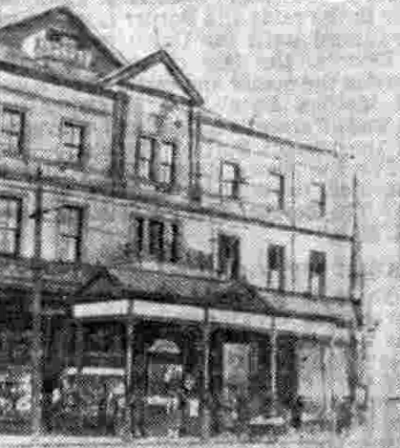
Right - The Palace Theatre, Newcastle with its original facade in 1939 - From the Newcastle Chronicle, 11th of March 1939.
In the main entrance from the Haymarket the new stairs are of marble, the dadoes are of panelled mahogany, the embossed paper harmonises with the decorative fibrous plaster design on the ceiling, a feature of which is the finely-painted panel in the centre. Clusters of electric lights have been provided. In the spacious vestibule the same scheme of decoration is carried out — heavy mahogany panelling, fibrous ceilings with painted panels, a decorated pay-office, mirrors, gold-inlaid cornices, and heavy carpets. The paintings in the ceiling panels represent the Muses, and have been carried out by Mr. Miller. The stairs and passages to the circle have been similarly treated.
The interior of the theatre has been entirely redecorated and refurnished. The general scheme of colours is cream and gold. Additional stalls have been provided. The gallery has been rearranged and furnished with another exit. Ventilation has been improved by a new electric fan, and fresh fire hydrants have been fitted.
The constructional work and mahogany fittings have been done by Mr. F. J. Hepple, Dunn-street, Newcastle; the ornamental copper grill is by Messrs. Hardman, Powell, and Co., of Birmingham; the brass and copper handrail in entrance, marble stairs, and fire hydrants by Messrs. Emley and Sons, Ltd.'
The above text in quotes was first published in the Building News and Engineering Journal, 4th of September 1903.
The Theatre reopened on the 31st of August 1903 with the J. Tiller Company Production of 'Uncle Tom's Cabin'. The Newcastle Daily Chronicle reported on the alterations to the Theatre in their 1st of September 1903 edition, saying:- 'To keep abreast with the wave of theatrical enterprise which is sweeping over Newcastle, the directors of the Palace Theatre have brought their popular house more completely up to date. For some weeks now this commodious and comfortable theatre has been in possession almost night and day of a small army of decorators and contractors' workmen, who had barely put on the finishing touches when the public were admitted for the reopening performance last night.
What the patrons of the Haymarket house saw was a transformed and re-beautified theatre. People wondered how in so short a time no great a change could have been made. Those, however, who have been behind the scenes and witnessed the unremitting supervision and energy of Mr. T. W. Rowe, the managing director, know that not a single moment has been lost, that as time was gained more additional work was done than was ever considered possible
The comprehensive scheme which has-been so successfully carried out is from the designs of Mr. J. Walton Taylor, F.R.T.B.A., architect, of St. John Street, Newcastle, and a has been ably superintended by Mr. P. R. Donald from the architect's office.
The main entrance from the Haymarket is the first improvement that strikes the visitor. The stairs are of marble, the dado are of richly panelled mahogany, the beautiful embossed paper harmonises with the decorative fibrous plaster design on the ceiling, a feature of which is the finely painted panel in the centre. Clusters of electric lights bring out the shades of colours. Up the centre of the entrance runs a heavy brass handrail which will divide the circle payees from those paying for the stalls. In the spacious vestibule the same scheme of decoration is carried out - heavy mahogany panelling, fibrous ceilings with painted panels, a richly designed pay office, mirrors, deep gold-inlaid cornices, heavy carpet, and everything that can suggest a chaste idea to luxury. The paintings in the ceiling panels represent the muses, and have been artistically carried out by Mr. Miller, a most capable artist. The stairs and passages to the circle have been similarly treated.
The interior of the theatre has been entirely re-decorated and re-furnished. The general scheme of colours is cream and gold, and the whole effect is both artistic and effective. The pillars in the dress circle have been covered with gold, and in the case of the heavier supports the sense of obstruction has been lessened and broken by series of mirrors. The chairs have also been re-arranged and re-covered; the orchestral stalls have been increased by another row and the stalls behind by another two rows - and this without encroaching on the more popular seats, which have been set much further back.
An early door entrance to the dress circle has been added from St. Thomas's Street; the gallery has been arranged and provided with another exit; ventilation has been improved by a new electric fan; fresh fire hydrants have been fitted; all the draperies and hanging are new, and everything seems to have been done to maintain the Palace as a first-class and attractive theatre.
The constructional work and mahogany fittings have been done by Mr. F. J. Hepple, Dunn Street, Newcastle; the fibrous plaster decorations, carpets and upholstery by Messrs. A. R. Dean and Sons, of London and Birmingham; the ornamental copper grilles by Messrs. Hardran, Powell and Co., of Birmingham; the brass and iron division rails by Messrs. Henry Walker and Sons, of Newcastle; the brass and copper handrail in entrance, marble stairs and fire hydrants by Messrs. Emley and Sons, Ltd.; the electric fan and ventilation and electric lighting by Messrs. Rowland. Barnett and Co.; the bevelled plate glace and mirrors by Messrs. Reed, Millican and Co., Newcastle: the stained glass by Messrs. Davison and Walker; and the Painting and decoration throughout by Mr. Matthew Alexander, Leases Park Road, Newcastle.'
The above text in quotes (slightly edited) was first published in the Newcastle Daily Chronicle, 1st of September 1903.
Palace Theatre Closure and Demolition 1959 / 1961
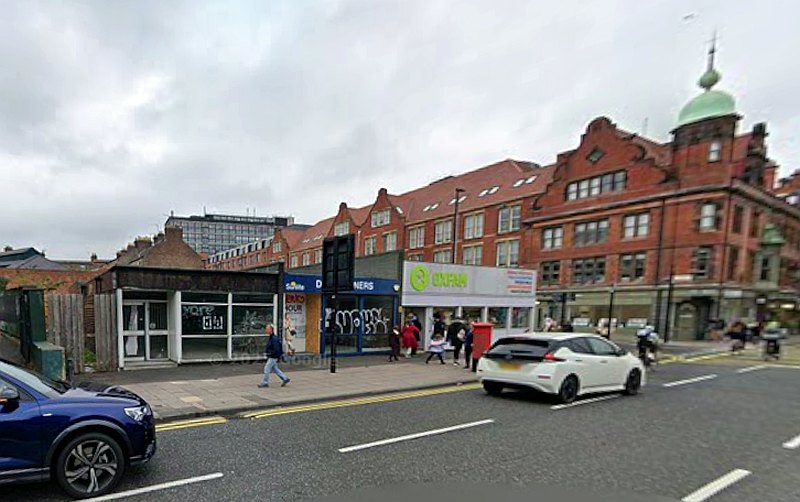
Above - A Google StreetView Image of the site of the former Palace Theatre, Percy Street and Haymarket, Newcastle in October 2024 - Click to Interact.
The Palace Theatre had reopened after the alterations on Monday the 31st of August 1903 and had quite a long life in this form, although sadly its facade would be radically altered in 1950. The Palace Theatre closed in July 1959 when the touring shows had dried up and it was difficult to fill. The building was then bought by the Council and they demolished it in 1961. A row of unremarkable shops and a car park were built on its site and amazingly are still standing on the Theatre's site today (See image above).
The Newcastle Evening Chronicle reported on the Theatre's Demolition in their 27th of November 1961 edition saying:- 'A legend in Georgian stone, hewed from the rich rock of a Northumberland quarry, has reached its day of reckoning. To the Impartial slam of a demolition hammer, the crash of masonry and the snarling of pneumatic drills, the Palace Theatre, Newcastle is being erased from memory. Poignancy is lent to the last days of the Palace by the ironic fact that it was Just 82 years ago that it was built. Like a tired but dignified old gentleman is the Palace resigned to its inescapable fate.
Soon the theatre where preachers threatened fire and brimstone, where circus elephants lumbered and where soft shoe shufflers spooned and crooned about the moon, will be a city landmark no more. The shape of things to come, when the palace is gone, will be temporary wooden shops and a spacious car park.
 The cost of demolition is estimated at £3,140. It will cost £2,750 to build the park and shops. The Palace, originally named the Percy Hall, first of all housed a circus. In 1888 the Livermore Brothers took it over and rechristened it People's Palace. In 1890 the sound of whinnying horses and chattering monkeys was replaced by hymns and sermons. Mr. Linden Travers started organising sacred concerts in the hall. But this was only eased for five years. In 1895 Alderman Rose Hall enlarged and altered the hall and renamed it the Palace Theatre.
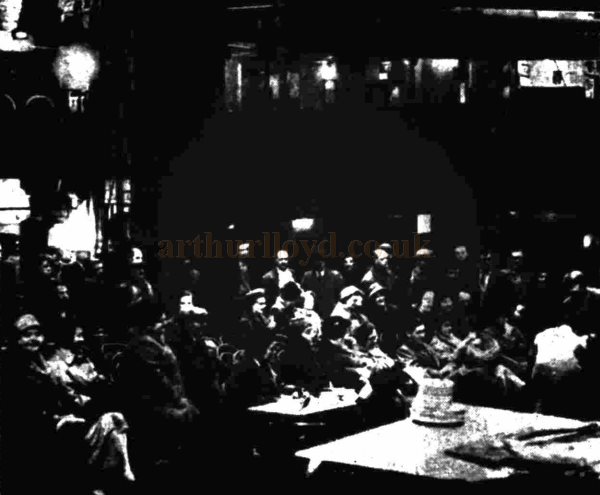
Right - The Last Audience at the Palace Theatre, Newcastle, assembled for the auction of its fixtures and fittings in January 1960 - From the Newcastle Evening Chronicle, 25th of January 1960.
The Palace was given a new frontage in 1950. It closed as a theatre in 1959. But it reopened for a day for the "saddest show on earth" - the auctioning of equipment and furnishings - in January 1960. An Intricately carved Jacobean chair went under the hammer for a scant eight shillings, ten shillings was all that was paid for an antiquated piano. That was the last time the Palace was open to the public... now the workmen have taken over.'
The above text in quotes was first published in the Newcastle Evening Chronicle, 27th of November 1961.
Donald Auty worked at the Palace Theatre many times in the 1950s and has written an article for this site entitled Reminiscences of working Newcastle's Palace Theatre in the 1950s which you can read here.
If you have any more images for this Theatre that you are willing to share please Contact me.