
The Store Street Music Hall, 16 Store Street, Bloomsbury, London
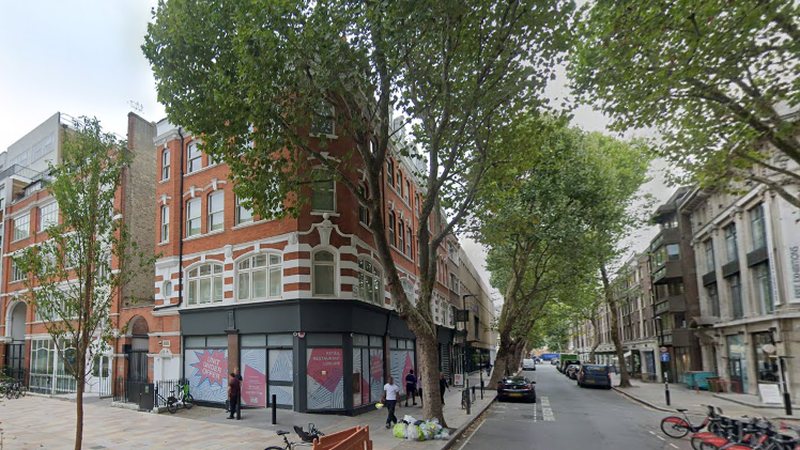
Above - A Google StreetView Image showing the site of the former Store Street Music Hall in September 2022 - Click to Interact.

 The Store Street Music Hall was situated at number 16 Store Street, which is a road running between Tottenham Court Road and Gower Street in London. Information for this Music Hall is sketchy but it was one of the very earliest of Music Halls, the Music Hall name itself only being used from the early 1830s.
The Store Street Music Hall seems to have first opened in April 1834, and was a large building with a lofty auditorium with seating only on ground level but with raised raked seating on either side and a platform stage at the far end. An image of the interior of the Music hall can be seen below.
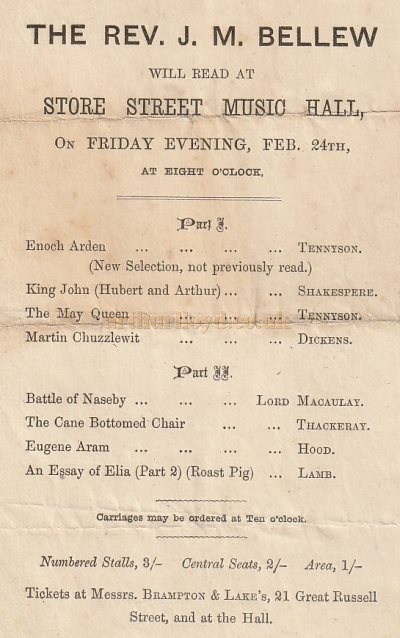
Right - An Early Programme for the Store Street Music Hall - Courtesy Simon Moss, stagememories.
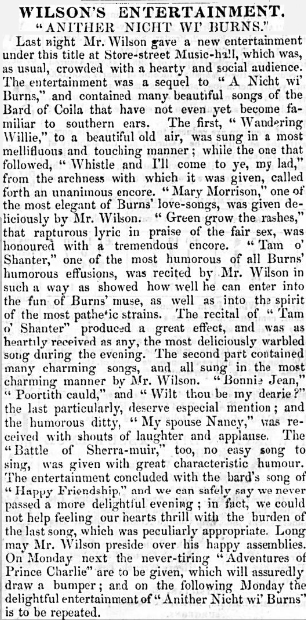 A regular entertainer at the Store Street Music Hall in the early 1840s was the singer Mr. Wilson who took the Hall for whole seasons there for many years, he was well known for performing songs by the famous Scottish poet and lyricist Robert Burns and was said to have been responsible for introducing them to audiences in the south. Wilson's popular seasons at the Store Street Music Hall were regular occurrences from 1843 to 1848, a review of one of his earliest performances there can be seen left.
Left - A Review for Wilson's Entertainment at the Store Street Music Hall in 1843 - From the Sun (London), 29th of March 1843.
The Store Street Music Hall was used for all manor of events including meetings, lectures, dramatic readings, concerts, and even boxing matches in its later years. In August 1859 it was the venue for a celebration of the 25th anniversary of the abolition of slavery, headed by Lord Brougham, one of the last remaining patriarch's of the cause at the time.
The Store Street Music Hall was still operating in the late 1800s and into the early 1900s but no notices appear for it in newspapers after 1905.
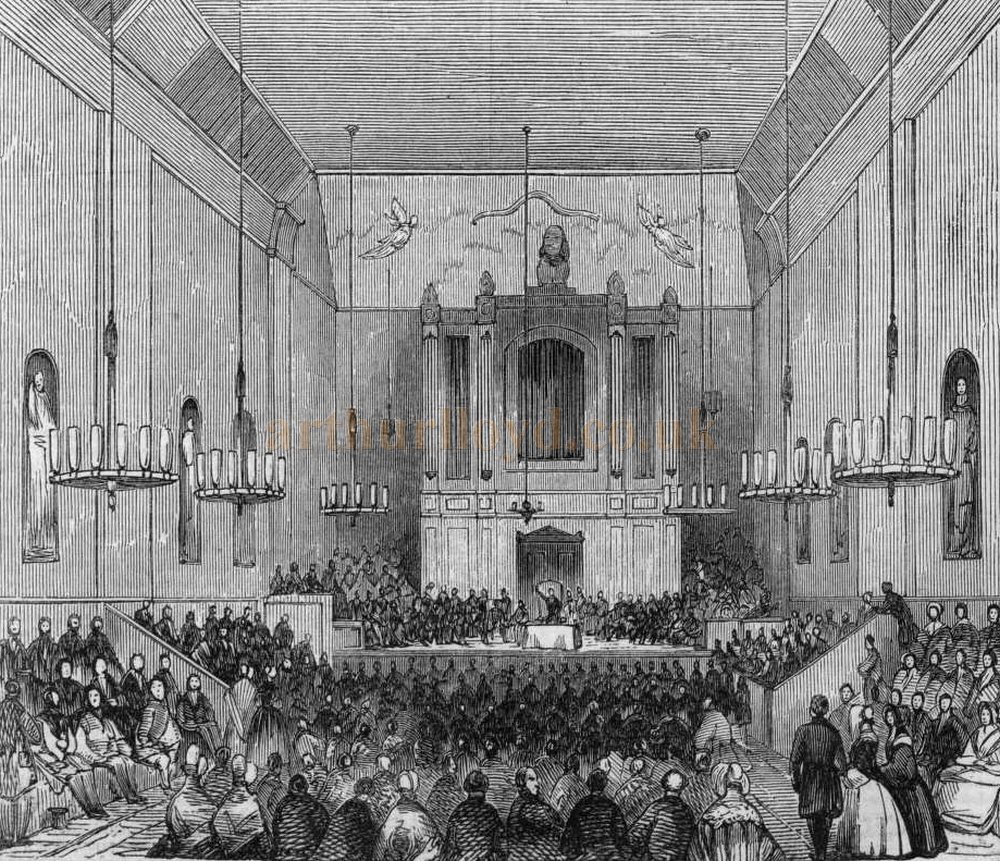
Above - The Interior of the Store Street Music Hall during a Meeting in aid of the indigent blind of London in 1843 - From the ILN, Volume 2 January to June, 1843.
If you have any more information or Images for this Theatre that you are willing to share please Contact me.