
Theatres in Walthamstow, London
The Soho Theatre, Walthamstow / Granada Theatre / King's / Victoria Palace - The Palace Theatre, Walthamstow High Street
The Soho Theatre, 186 Hoe Street, Walthamstow
Formerly - The Victoria Hall / The Victoria Palace Theatre / King's Theatre / Granada Theatre / Cannon / Virgin / ABC / EMD Cinema
Introduction - Granada Theatre - Later history and Soho Theatre Walthamstow
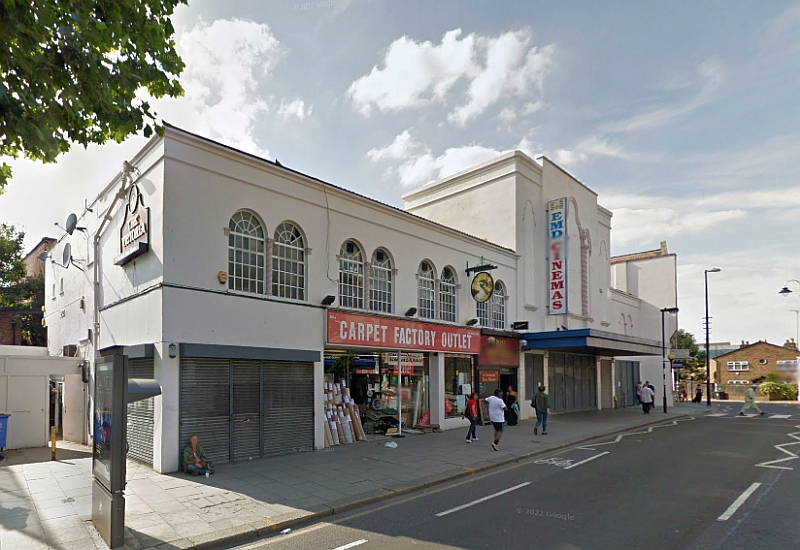
Above - A Google StreetView Image showing the Former Granada Theatre, Walthamstow carrying signage for its by then closed incarnation as the EMD Cinema in April 2012. This would later be refurbished and restored as the Soho Theatre Walthamstow for its 2025 reopening - Click to Interact.
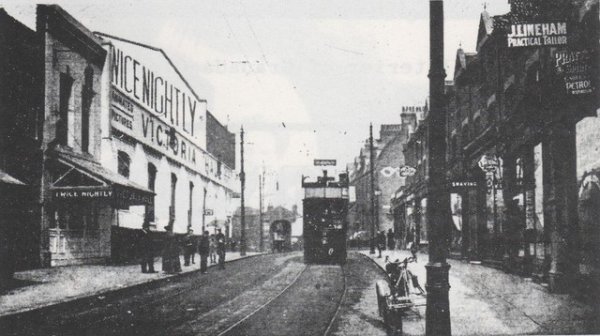 The Soho Theatre, Walthamstow is situated on Hoe Street, Walthamstow and Opened in May 2025. The Theatre is a reconstruction and refurbishment of the former Granada Theatre which had first opened in 1930 and was itself built on the site of an even earlier Theatre called the Victoria Palace Theatre which had itself first opened on the 2nd of May 1887 as the Victoria Hall.
Right - The Victoria Hall, Walthamstow in 1910 - Reproduced here with a Creative Commons (Attribution) License from the Cinema Treasures Website.
The Victoria Hall was later converted into a Theatre in 1896 and altered in 1899 for a reopening as the King's Theatre but the Theatre's name was reverted back to the Victoria Hall in 1907. Later remodelled the Theatre was renamed the Victoria Palace Theatre for its reopening on the 2nd of September 1921. The Theatre was later purchased by Sydney Bernstein for complete rebuilding as the Granada Theatre which opened on Monday the 15th of September 1930. More details on the current Soho Theatre can be read below but first some details of the former Granada Theatre it replaces.
The Granada Theatre, Walthamstow
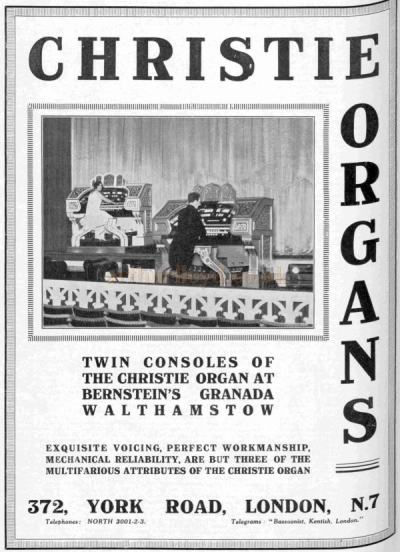
The Granada Theatre, which was opened on Monday the 15th of September 1930, was designed by Cecil Masey in the Spanish Moorish style with its Auditorium designed by Theodore Komisarjevsky, seating 2,697 people in its Stalls and single Circle. The Foyer of the Theatre was designed in the Spanish Baroque style and had large mirrors on its walls and furniture designed especially for the Theatre by Komisarjevsky. Unusually for a Cinema Theatre of this period although the Granada did have a fully equipped Stage it did not have a Fly Tower. The Theatre was equipped with a Christie Theatre Organ with two Consoles, one on the Stage and the other in the Orchestra Pit, played by Charles Willis and Josie Bradley on its opening.
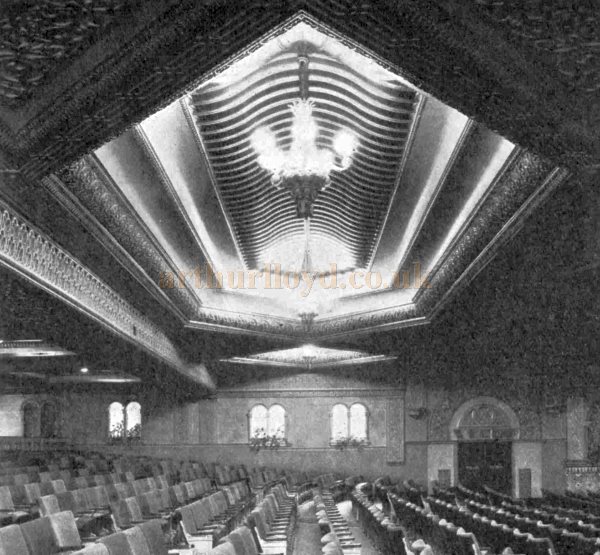 The Bioscope reported on the new Granada in its 17th of September 1930 edition saying:- 'The Granada, Walthamstow, which opened on Monday, is due to the imaginative enterprise of Sidney Bernstein, who proves himself an artist-exhibitor of fine taste with a bold originality. The theatre was designed by Cecil Masey, F.R.I.B.A., to seat 3,000, and the whole of the internal decoration has been carried out by Theodore Komisarlevsky, the celebrated stage producer and former director of the Moscow Art Theatre.
Right - The Auditorium of the Granada Theatre, Walthamstow when it first opened in 1930 - From The Bioscope, 17th of September 1930.
The inspiration of the decorative art of the theatre is Spanish-Moorish, indicative of the Moorish Palace of Granada, but in no Way a slavish imitation of the ancient Alhambra. In fact, the decorative artist has endeavoured with great success to give an impression of old Moorish architecture under Modern conditions and surroundings. From the known knowledge of the art of the Moors in the Iberian Peninsula, he has evolved a new Alhambra, for the auditorium and foyer ceiling, not true in detail to that of Granada, but seeming to give at least an impression of the decorative art of the old conquerors of Spain.
Entertaining Waiting Patrons
The large quadrangular entrance foyer, with its beautiful marble floor and short, wide staircases leading to the circle foyer, is gorgeously decorated in the seventeenth century Spanish Baroque style with beautiful mirrors and immense cut glass chandeliers, with smaller chandeliers in situ.
The circle foyer is probably the most charming yet conceived with its wonderful decorative effects, glass chandeliers, etc., while here and there yet in true perspective flourish flowering shrubs and grape vines. In the walls are etchings and photographs of the real Alhambra, the general colour effects being gold, sunray and pale green. The whole of the foyer is most sumptuously carpeted, in harmony with the general ensemble.
A unique feature of the main foyer, and one which is indicative of its spaciousness, is that it is proposed to entertain waiting patrons with pianoforte selections and turns of that nature. For that purpose a grand piano is positioned above the main ground floor entrance.
Uncommon Seating Effect
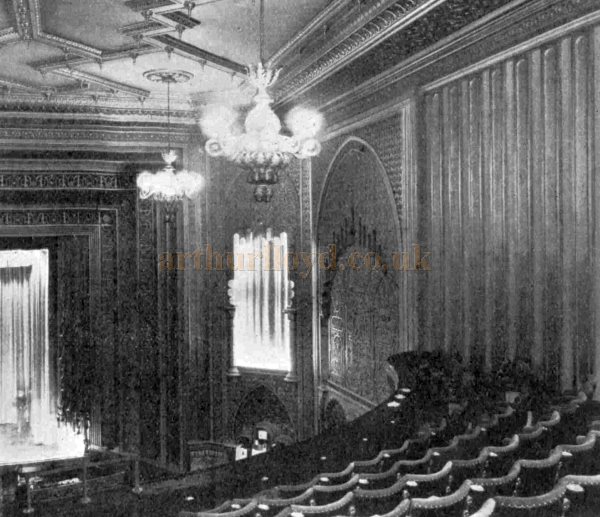 The auditorium itself is entirely different in its decorative scheme from any other theatre yet attempted. In its practically square loftiness it resembles an enclosed Palace court. The heavily patterned walls glow with bright colours, every detail being so perfectly balanced that the intricate crowded designs hang together in satisfying unity, composing a scheme of gay yet noble beauty.
Right - The Auditorium of the Granada Theatre, Walthamstow when it first opened in 1930 - From The Bioscope, 17th of September 1930.
As in the foyers, so in the auditorium and circle the novel and fanciful beauty of the decorative scheme is allied with the up-to-the-minute modernity in equipment. Three thousand cosy, well-spaced, carefully positioned stall seats permit patrons to watch the entertainment in real comfort. An uncommon and charming effect has also been obtained by upholstering the seating in alternate deep claret and dark orange corded velvet.
 The lighting system represents the last word in electrical ingenuity and this includes the wonderful array of stage lighting effects. The main auditorium lighting is by massive electroliers carried out in deep blue and Yellow and presenting a most pleasing and effective breakaway from the usual media.
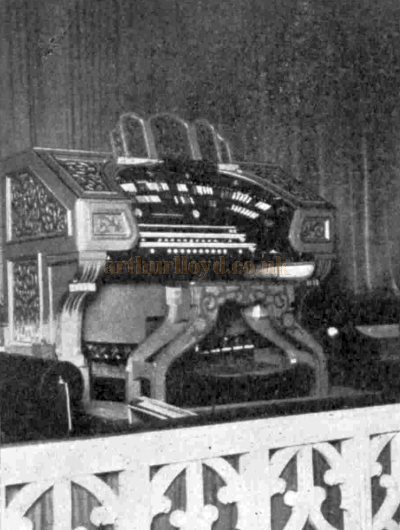
A very large orchestra pit on ground floor level which will accommodate twenty instrumentalists has been installed, in addition to one of the organ consoles, which is positioned in the centre on an electric hoist. A unique feature of this theatre is that it has been equipped with two distinct organs, the second organ console, which is mobile, being permanently housed on the stage. The sound chambers of the organs have been placed over the proscenium arch.
Left - One of the Organ Consoles at the Granada Theatre, Walthamstow when it first opened in 1930 - From The Bioscope, 29th of October 1930.
 A very large stage, complete with every device necessary for the presentation of vaudeville, is also a feature, as are the many sets of beautiful draperies; conspicuous above all are the stage curtains, which are of a delicate pale green silk hue with a deep embellishment of orange, black, green and white.
Right - An Advertisement for Christie Organs showing the twin Consoles at the Granada Theatre, Walthamstow in 1930 - From The Bioscope, 19th of November 1930.
Perfect Air Conditioning
Great care has been lavished in the projection room and its attendant offices, Ross Machines being utilised and Western Electric being the sound system installed. The theatre, with an almost human plenum air-conditioning plant, has the perfect climate which is now so characteristic of all leading Cinemas.
The enterprise, which has made this unique theatre possible in these days of wonderful exhibiting achievements, is certainly a notable tribute to Sidney and Cecil Bernstein and their collaborators. The theatre personnel includes: Noel Hobart, manager; W. M. Pope, chief engineer; I. C. Burgess, assistant manager; J. Munks, stage Manager; E. J. Barber, conductor; Mr. and Mrs. Smith, organists; R. H. Robertson, chief projectionist.
Contractors
The main contractors were Geo. Parker & Sons, Ltd., Sumner Street, S.E.15, and sub-contracts were let as follows: Fibrous plastering, Clark & Fenn, Ltd, Sedgmoor Place, S.E.5; ventilating engineers, J. Jeffreys & Co., Ltd., Barrons Place, S.E.1; organs, Wm. Hill & Sons and Norman & Beard, Ltd., York road, N.7; electrical engineers, Grierson, Ltd., Bloomsbury Place, W.C.1.; seating and furnishings, Kinematograph Equipment Co., Ltd., Wardour Street, , W.1.; sound apparatus, Western Electric Co., Ltd., Bush House, W.C.2.; projection equipment, Kinematoraph Equipment Co., Ltd.; steel contractors, Moreland Mayne & Co., Ltd., Goswell Road, E.C.1.; decorations, Campbell Bros., Ltd., Albert Embankment, S.E.11; elevation plastering, F. Bradford & Co., Coopersale Road, E.9.; marble floorings, Charles Walker & Co., Battersea Bridge Road, S.W.11; marble walls, Fennings & Co., Hammersmith, W.6; vacuum cleaning plant, British Vacuum Cleaner & Engineering Co., Ltd., Parsons Green Lane, S.W.6.; lifts, W. J. Furse & Co., Ltd., Nottingham; The surveyor was Walter J. Holt, Old Burlington Street, W., and the consulting steel work engineers were S. H. White & Son, Victoria Street, S.W.1.'
The above text in quotes was first published in The Bioscope, 17th of September 1930.
Later history and Soho Theatre Walthamstow

Above - A Google StreetView Image showing the Soho Theatre, Walthamstow, formerly the Granada Theatre, under restoration and refurbishment in September 2024 - Click to Interact.
 The Granada Theatre had first opened on the 15th of September 1930 and was used for Film, Variety shows and Pantomimes for many years. Later it often became host to pop and rock concerts too, one of these, a concert by Duke Elington and his band, saw the Orchestra Pit being covered over to extend the Stage forward which also covered up the Organ Console, although the on stage Organ Console remained for use.
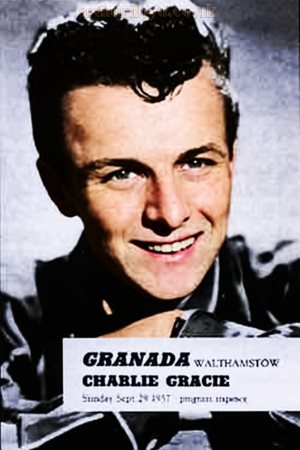
Right - A Programme for Charlie Gracie appearing at the Walthamstow Granada in September 1957 - Courtesy Charlie Gracie Jnr.
The Theatre was tripled in 1973 with two small screens in the former rear stalls area, and the main screen now in the Theatre's Circle using the original proscenium, screen, and projection box while the front stalls area was mothballed. During the war the top part of the Theatre's Facade had been damaged and in the tripling this was removed altogether.
Taken over by Cannon Cinemas in 1989 the Theatre was renamed as such, and this remained until it was taken over by the Virgin Group in 1995 and renamed a Virgin Cinema instead. It was renamed again, this time to ABC when they took over the Theatre in 1996. Later taken over by Odeon, although not renamed this time, they soon closed the Theatre and it was then taken over by an Independent Operator and renamed the EMD Cinema, showing Bollywood Films and eventually English Language Films too. EMD closed the Theatre in January 2003 after a final showing of the film 'The Smallest Show On Earth' along with a concert on the Theatre's Organ, using the on stage Console, and a variety show.
The Theatre had been sold to the UCKG Church Group who hoped to convert it for Church use but they were refused planning permission. Meanwhile the Theatre's former restaurant which had a separate entrance was still being used as a pub called The Victoria, named after the Theatre's original incarnation as the Victoria Hall back in 1887
Boarded up and unused the rest of the Theatre was soon in a perilous condition and was used for an illegal rave not long after EMD had closed the building. Subsequently it was taken over by squatters and further damage ensued. Meanwhile the Church Group who owned the building went through a lengthy, and ultimately unsuccessful, bid to use the Theatre for their purposes.
 Eventually it was sold to the Antic pub group for a hopeful reopening for entertainment use and the Foyer was opened up as a kind of pop up pub called Mirth which was quite popular. Later one of the former smaller screens was reopened for occasional film use in 2016.
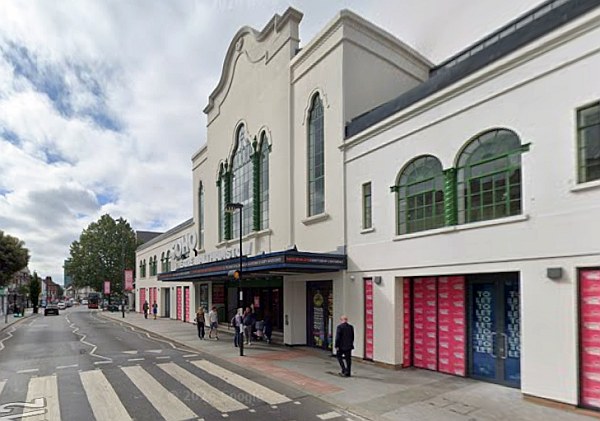
Left - A Google StreetView Image showing the Soho Theatre, Walthamstow in August 2025 - Click to Interact.
The Theatre's saviour came in 2019 when Waltham Forest Council purchased the building with the aim of refurbishing and restoring it for theatrical use. By 2020 both the Merth Bar and the Victoria Pub had been closed and refurbishment work had begun, and in 2022 it was announced that the building would be run by the Soho Theatre whose own successful small Theatre in Soho had been running for many years already. When the building reopened in May 2025 it was named the Soho Theatre Walthamstow.
The former Granada Theatre is today a Grade II* Listed building.
You may like to visit the Soho Theatre Walthamstow's own Website here.
Some of the later information for this Theatre was gleaned from the excellent Cinema Treasures Website.
If you have any more information or images for this Theatre that you are willing to share please Contact me.
The Palace Theatre, 195 to 197 Walthamstow High Street, Walthamstow, London

Above - A Postcard sent in 1913, showing the Palace Theatre and High Street, Walthamstow

The Palace Theatre, situated on the Walthamstow High Street in London, was opened on Monday the 28th of December 1903 with a production of 'Jail Birds' by the Fred Karno Company. The Theatre was designed by the well known Theatre Architects Wylson and Long, and operated by the Chelsea Palace Syndicate, the same Company who built and ran the Palace Theatre, Tottenham, the Chelsea Palace, and the Palace Theatre in East Ham, all also designed by Wylson and Long.
The Building News and Engineering Journal reported briefly on the new Theatre in their 25th of December 1903 edition saying:- 'The Palace Theatre will be opened on Monday next. The architects are Messrs. Wylson and Long, who have designed a building in the English Renaissance style, the imposing elevation having at either end a bold tower finished with stone and metal turrets, supporting flag standards. Under an iron and glass awning the main entrance opens into a spacious vestibule, which has a high dado of Austrian oak, with plastic decorations above, and a panelled and decorated ceiling. In front is a handsome box-office in polished walnut wood, to the right an archway, giving admittance to the stalls corridor, and on the left a broad staircase, the steps formed in mosaic and the walls of marble, leading to the balcony circle. The ground floor is divided into stalls and pit. Over the balcony, in which there are eleven rows, is a spacious gallery. The theatre being constructed on the cantilever system, an uninterrupted view of the stage is secured from every part of the house.' - The Building News and Engineering Journal, 25th of December 1903.
The Stage Newspaper also reported on the imminent opening of the Walthamstow Palace, and in greater detail, in their 24th of December 1903 edition saying:- 'A large and representative company of ladies and gentlemen interested in the music-hall stage assembled at this latest addition to the numerous "palaces" of Greater London on Monday afternoon, in response to the invitation of Mr. G. Adney Payne and his follow-directors, the object being a private view of the new building.
The Walthamstow Palace has been erected in High Street, and is a decided architectural ornament to the town. The building has been designed by Messrs. Wylson and Long, of King William Street, E.C. The front is in the English Renaissance style, the materials being red brick and Bath stone. Terminating the building at either end are bold towers, finished with stone and metal turrets, supporting flag standards. An iron and glass awning is fitted over the main entrance doors, passing through which the vestibule is reached. The vestibule has a high dado of Austrian oak, with plastic decorations above, and a panelled and decorated ceiling. On the right-hand wall is a marble tablet fixed to commemorate the completion of the building. The inscription, in gold letters is as follows:-
This Stone was laid by
William Langman, Esq, E.C.C.,
21st December, 1903.
Directors:
Joseph Davis. G. Adney Payne.
Henri Gros. Henry Tozer.
Architects: Wylson and Long - Builder: A. J. Bateman.
In the centre of the vestibule and opposite the entrance-doors is a handsome box-office, in polished walnut wood, and on the right of this box-office is an archway leading to the stalls corridor, while on the left is a spacious staircase leading to the balcony circle. The steps are formed in mosaic (Diespeker's patent), with ornamental borders worked in the material. The balustrade is in Austrian oak, with bold newels and balusters, and the plinths, skirtings, and dado are of marble. Messrs: Warmsley and Co. are responsible for the oak work, while the marble has been executed by Messrs. Fenning and Co. At the top of this staircase is the entrance to the balcony. Here the appearance of roominess and comfort of the eleven rows of rich crimson velvet seats (by Mr. J. S. Lyon), the ample gang-ways, and the graceful curve of the balcony front, is very striking and effective. At the rear of the back gangway is a spacious foyer, where tea, coffee, and other light refreshments are obtained. The ground floor of the building is divided into stalls and pit; while above the balcony is a large gallery. On either side of the proscenium are two private boxes, one over the other, reached respectively from the Stalls and balcony levels. The Theatre is constructed on the principle known as the cantilever system, carried out by Messrs. Hawkins and Baxter, whereby all columns inside the auditorium are avoided, thus securing an uninterrupted view of the stage from every part of the house.
The scheme of decoration for the interior is English Renaissance, the colouring being cream and white, relieved with gold, executed by Messrs. Bookbinder and Son. The hangings and draperies by the well-known firm of James Schoolbred and Co., are in rich crimson velvet, forming a strong relief to the general, tone of the decorations.
A sun-burner is fixed in the centre of the ceiling and gracefully designed electric pendants, supplied by the General Electric Light Company, serve to illuminate the auditorium. Gas lighting is also provided throughout in every case as a duplicate service. Ample exits from every part of the house are provided, and in case of necessity the building could be emptied in the short space of two minutes.
Special attention has been given to the heating and ventilating of the auditorium, so that the temperature at all seasons of the year is equable and pleasant. The heating has been carried out by Messrs. Strode and Co., and the ventilation by Messrs. Wheeler and Sons. The Electrical Name and Numerical Sign Company have fixed one of their indicating signs to make the various turns.
The stage has received careful and thorough consideration. It is commodious, well proportioned, and fitted with all necessary details for expeditious working. Here is the electric light board, with its numerous switches and levers, whence is controlled the whole of the lighting of the auditorium and the scenic effects of this stage. The whole, of this work has been carried out by Messrs. Leo Sunderland and Co.
The stage is separated from the auditorium by a fire-resisting curtain worked both by hand and by an electric motor. It is also provided with a duplicate gear for lowering in case of need. This gear is fixed close to the stage door, so that it can be operated by any person off the stage. This curtain is also provided with a sprinkler installation, which, in case of fire, would discharge volumes of water on to the stage. The curtain and gearing have been executed by Messrs. E and E. Taylor. Separated from the stage by a fire-resisting door is the dressing-room block, fitted with all things necessary. The proscenium opening is fitted with a beautifully-designed and painted act-drop, by Cecil Hicks.
The entertainment at the Walthamstow Palace - which, by-the-way, opens on Monday next - will be given on the "two houses-a-night " system, which has already been found to work so satisfactorily at the other halls under the same directorate. The managing director is Mr. G. Adney Payne, and Mr. Arthur J. Barclay has been appointed total manager.
At the private view on Monday there was little attempt at the making of set speeches, the visitors being more anxious to examine the building. Mr. Longman, however, in declaring the memorial tablet above referred to well and truly laid, made a few spirited remarks in wishing the enterprise every success, and Mr. Payne replied in a few felicitous words of welcome and thanks. The company were afterwards entertained on the stage.
The acoustic properties of the building were agreeably tested by two gentlemen, who sang a few duets with great effect. It should be mentioned that the orchestra will be led by Mr. Peterson, and the stage-manager is Mr. J. Grant. Mr. Slater, late of the Canterbury, is the acting-manager. The entire scenery, which is extremely picturesque and effective, is from the brush of Mr. Francis H. Bull. A handsome act-drop has been supplied by Mr. Hicks. Under its experienced directorate the new Palace of Varieties should have a most prosperous future.'
The above text in quotes was first published in the Stage Newspaper, 24th of December 1903.
The Walthamstow Palace opened on Monday the 28th of December 1903, and, fitted with a bioscope box, it was screening early films as part of its variety programing from the start.
In 1952 the Theatre was taken over by Countess de la Marr who then operated the Theatre as a Playhouse, opening with a production of Agatha Christie’s 'The Hollow' by the Savoy Players. The Theatre then continued as a Playhouse for a few years until its eventual closure on the 20th of February 1954.
Sadly the Theatre was then left vacant for many years, falling into a state of dereliction until it was finally demolished in 1960. A Parade of shops and flats called Palace Parade was then constructed on the site.
Some of the information for this Theatre was gleaned from the excellent Cinema Treasures Website.
If you have any more information or images for this Theatre that you are willing to share please Contact me.