
Theatres in Southsea, Portsmouth
The Kings Theatre - The Southsea Assembly Rooms and Baths
See also in this area: Portsmouth Theatres - Southampton Theatres - Fareham Theatres
The Kings Theatre, Albert Road, Southsea, Portsmouth
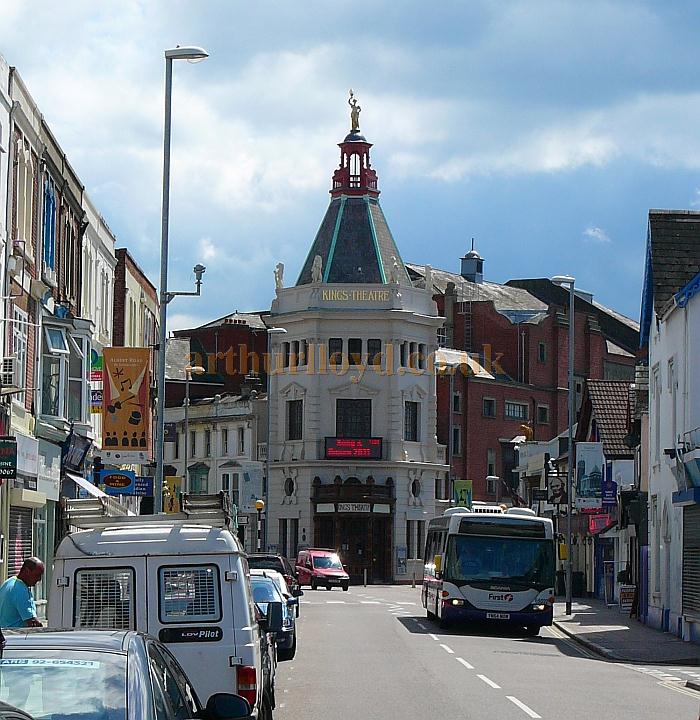
Above - The Kings Theatre, Southsea in 2011 - Courtesy B.F.

 The
Kings Theatre is situated on Albert Road in Southsea, Portsmouth and was built in 1907 for John Waters Boughton, and designed in the Italian Renaissance style
by the renowned Theatre Architect Frank Matcham. The Theatre opened on the 30th
of September 1907 with Henry
Irving's son H. B. Irving playing three of his father's most successful
roles in the Theatre's first week, 'Charles I', 'The Lyons Mail' and
'The Bells'. The Theatre's auditorium consists of four levels, stalls
and three balconies, and originally had a capacity of 2,172, although
this has since been reduced several times over the years. The Theatre
currently accommodates around 1,400 people.
The
Kings Theatre is situated on Albert Road in Southsea, Portsmouth and was built in 1907 for John Waters Boughton, and designed in the Italian Renaissance style
by the renowned Theatre Architect Frank Matcham. The Theatre opened on the 30th
of September 1907 with Henry
Irving's son H. B. Irving playing three of his father's most successful
roles in the Theatre's first week, 'Charles I', 'The Lyons Mail' and
'The Bells'. The Theatre's auditorium consists of four levels, stalls
and three balconies, and originally had a capacity of 2,172, although
this has since been reduced several times over the years. The Theatre
currently accommodates around 1,400 people.
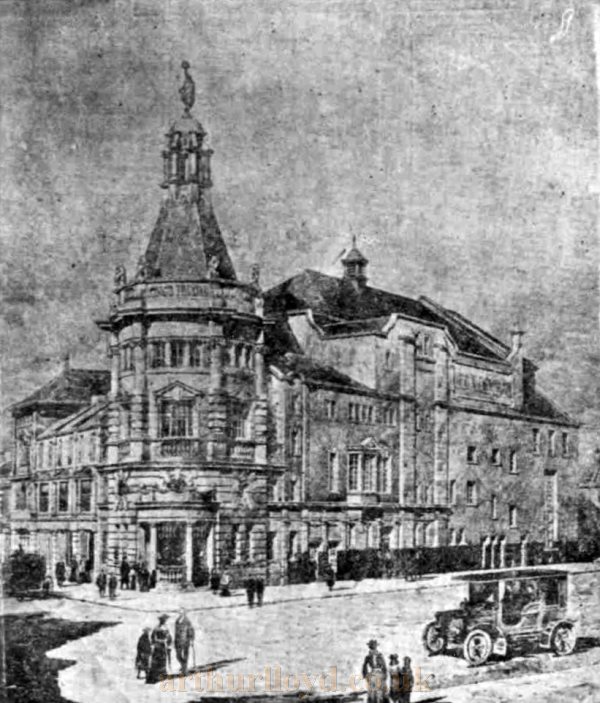
Right - The King's Theatre, Southsea in 1907 - From the Hampshire Post and Southsea Observer, 13th of September 1907.
 The Stage Newspaper reported on the
newly built Kings Theatre in their 19th of September 1907 edition saying:- 'Prior to the public opening on the 30th inst., when Mr. H. B. Irving, supported by his company,
will start a series of performances with Charles I., a private-view
was accorded shareholders and others on Thursday afternoon, September
12, at the invitation of the directors. Visitors, who responded in large
numbers, were loud in their admiration of the beautiful building presented
to their view.
The Stage Newspaper reported on the
newly built Kings Theatre in their 19th of September 1907 edition saying:- 'Prior to the public opening on the 30th inst., when Mr. H. B. Irving, supported by his company,
will start a series of performances with Charles I., a private-view
was accorded shareholders and others on Thursday afternoon, September
12, at the invitation of the directors. Visitors, who responded in large
numbers, were loud in their admiration of the beautiful building presented
to their view.
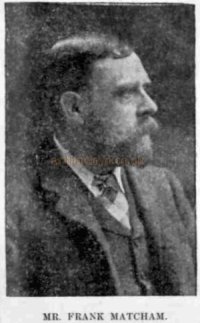
Left - Frank Matcham, architect of the Kings Theatre, Southsea in 1907 - From the Hampshire Post and Southsea Observer, 13th of September 1907.
The new house is situated in the eastern portion of the borough in a very accessible position, being served with trams from all parts. Constructed from the designs of Mr. Frank Matcham from a plan which appeared in this paper some twelve months or so ago, the Kings lacks nothing that long experience can furnish in providing comfort and pleasure to the audience. To assure safety in event of fire, brick, steel, and concrete predominate. The whole of the circles, pit, saloons, etc., have these materials as their basis; in fact, fire-proof construction throughout is preeminent.

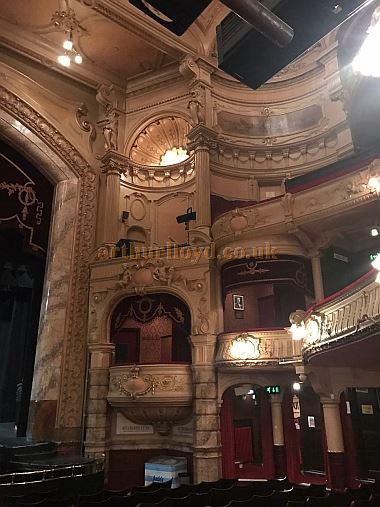
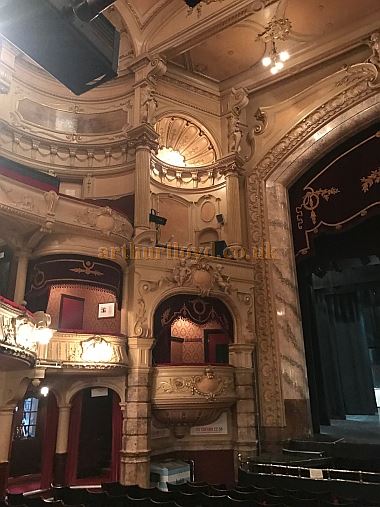
Above - The Auditorium of the Kings Theatre, Southsea in April 2017 - Courtesy Michael Shaw.
 It
is a three-tier house, built on the steel cantilever principle, with
lattice girders. No columns interfere with the view. Exits and gangways
abound, saloons, ladies' boudoirs, and cloak rooms are provided liberally.
It
is a three-tier house, built on the steel cantilever principle, with
lattice girders. No columns interfere with the view. Exits and gangways
abound, saloons, ladies' boudoirs, and cloak rooms are provided liberally.
 Upwards of 2,000 persons can be comfortably seated.
The gallery contains fourteen rows of seats, so placed that everyone can obtain an excellent view.
The upper circle is commodiously arranged, and there is a fine dress circle, as well as orchestra stalls, pit, and six private, boxes.
Left and Right - The Auditorium of the Kings Theatre, Southsea in April 2017 - Courtesy Michael Shaw.
The decorations are generally executed in cream and gold, with bluish-green hangings, upholstery, and carpets.
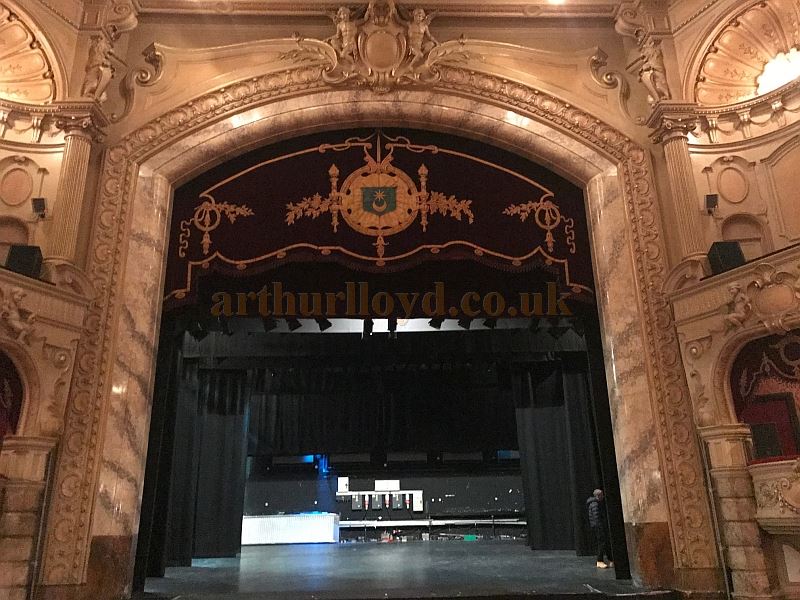
Above - The Auditorium and Stage of the Kings Theatre, Southsea in April 2017 - Courtesy Michael Shaw.
Leaving the auditorium and going to the back of the house, the stage strikes one by reason of its roomy character and design and abundance of modern appliances, electric, scenic, etc. In all respects it fulfils the requirements of the most exacting stage manager. There are seventeen dressing-rooms and ballet-room. A fire-proof curtain is provided; also thickly-bricked, easily accessible exits for the use of the artists.
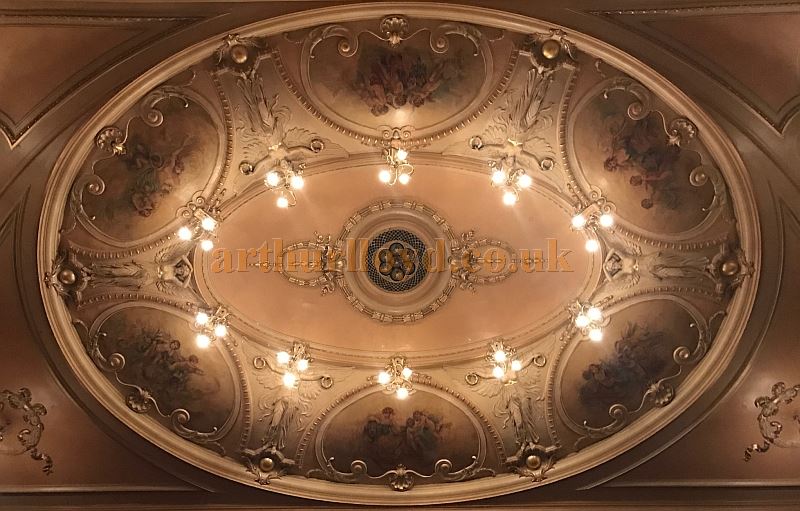
Above - The Auditorium Ceiling of the Kings Theatre, Southsea in April 2017 - Courtesy Michael Shaw.
 Externally the principal elevation is towards the corner of Albert
and Exmouth Roads, where there is a lofty tower. Here is the entrance
to the stalls and dress circle. The exterior is executed in Portland
cement, glazed bricks and Rowlands Castle pressed facing bricks.
Externally the principal elevation is towards the corner of Albert
and Exmouth Roads, where there is a lofty tower. Here is the entrance
to the stalls and dress circle. The exterior is executed in Portland
cement, glazed bricks and Rowlands Castle pressed facing bricks.
Right - Robert Briggs' Panic Bolts, as fitted to one of the exit doors at the Kings Theatre, Southsea - Courtesy Patricia Lovell.
 The
whole structure has been erected by Mr. Frank Corke, well known in connection
with his excellent work at the Royal, Prince's, Empire,
etc., under the supervision of Mr. J. F. Revill, clerk of works. Both
with the architect are to be congratulated
on handing to the company so handsome an addition to the public buildings
of Portsmouth. It is, perhaps,
worthy of mention that the house has been built within the specified
contract time.
The
whole structure has been erected by Mr. Frank Corke, well known in connection
with his excellent work at the Royal, Prince's, Empire,
etc., under the supervision of Mr. J. F. Revill, clerk of works. Both
with the architect are to be congratulated
on handing to the company so handsome an addition to the public buildings
of Portsmouth. It is, perhaps,
worthy of mention that the house has been built within the specified
contract time.
Left - A 1940s programme cover for the Kings Theatre, Southsea - Courtesy David Smith.
Mr. J. W. Boughton, managing director of Portsmouth Theatres, Ltd., to whose energy the possession of this house is largely due, was the recipient of highly deserved congratulations. He has appointed Mr. E. Bertram resident manager.'
The above text in quotes was first published in the Stage Newspaper, 19th of September 1907.
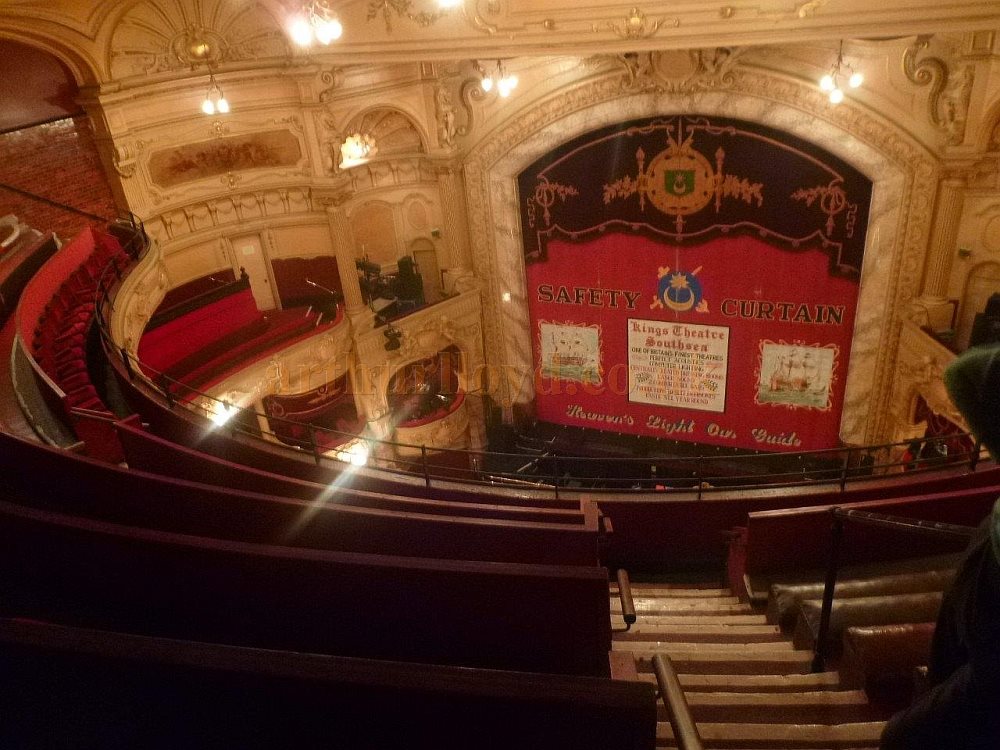
Above - The Auditorium and Safety Curtain of the Kings Theatre, Southsea around 2015 - Courtesy Roger Fox.
 The
Kings Theatre had first opened on the 30th of September 1907 with Henry Irving's son, H. B. Irving, playing
three of his father's most successful roles in the Theatre's first week, namely
'Charles I', 'The Lyons Mail' and 'The Bells'.
The
Kings Theatre had first opened on the 30th of September 1907 with Henry Irving's son, H. B. Irving, playing
three of his father's most successful roles in the Theatre's first week, namely
'Charles I', 'The Lyons Mail' and 'The Bells'.
The Theatre was built for John Waters Boughton originally, but when he died in 1914 his Company, Portsmouth Theatres, ran the Kings right up until 1964 when it was bought by Commander Reggie & Mrs Joan Cooper.
Right - The Kings Theatre, Southsea during the run of 'Can-Can' in August 1956 - Courtesy Gerry Atkins.
 In 1990 the Kings was bought by Hampshire County Council but when
its future began to look uncertain a Campaign was launched to restore
the building and it was eventually bought by Portsmouth City Council in 2001 and then leased back to the Kings Theatre Trust
LTD., who have now been running the Theatre since 2003.
In 1990 the Kings was bought by Hampshire County Council but when
its future began to look uncertain a Campaign was launched to restore
the building and it was eventually bought by Portsmouth City Council in 2001 and then leased back to the Kings Theatre Trust
LTD., who have now been running the Theatre since 2003.
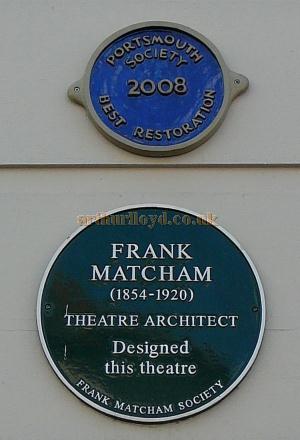
Left - Two Plaques situated on the Kings Theatre, Southsea celebrating the work of the Theatre's Architect, Frank Matcham, and the Restoration of the Theatre - Courtesy B.F.
 The
Kings Theatre has had over £2.5 million spent on its restoration since Portsmouth City Council bought it in 2001.
The
Kings Theatre has had over £2.5 million spent on its restoration since Portsmouth City Council bought it in 2001.
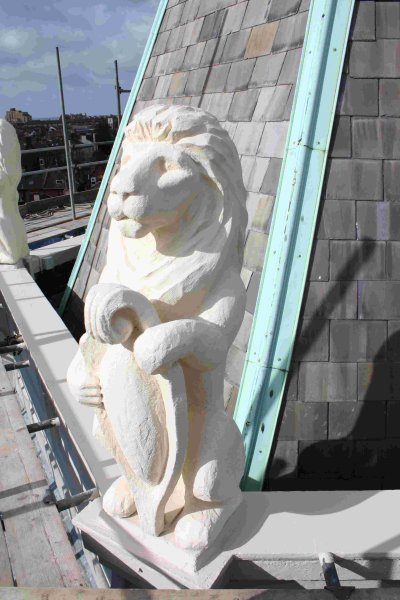
In 2009 the wooden cupola on the tower of the Theatre was found to be rotten and needed to be replaced. To achieve this it was felt that Fibreglass would be the way forward as it is weather proof and can be precoloured and needs very little maintenance. A firm of fiberglass specialists from West Sussex called Jago were brought in and took moulds of the original structure including the original lady statue, that had been removed in the late 1940's.
Right - One of the newly recreated Fibreglass Lions which adorn the cupola on the tower of the King's Theatre - Courtesy Chris Grant, Kings Theatre, Portsmouth.
 At the same time new moulds of the lions which had disappeared sometime before the last war were made and cast. A competition was held by the Portsmouth News to name the statue. The winning entry was Aurora, the Roman goddess of the dawn.
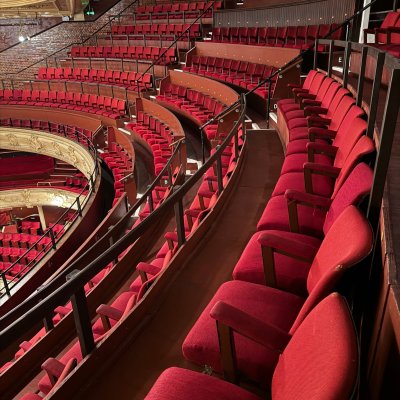
 Left - The new Gallery Seating at the King's Theatre, Portsmouth - Courtesy Chris Grant, Kings Theatre, Portsmouth.
A more recent project at the Kings Theatre has been the reseating of the gallery. The original padded stepping has been kept but boxed in to create a mount for the replacement seats. This has increased the Theatre's seating capacity by 249. Because of this new gender neutral toilets were created off of the Gallery's Long Bar, which was also brought back into use at the same time.
Right - The Fly Gallery of the Kings Theatre, Southsea around 2015 - Courtesy Roger Fox.
The Kings Theatre, and the Theatre Royal Portsmouth were once part of the same company 'Portsmouth Theatres Ltd. When the Kings was bought into private ownership in 1964 the partnership ended. But recently, after 60 years apart, it was decided to bring the two Theatres back together again under a shared leadership team led by its CEO Richard Pearce, with Damon Repton chairing both Boards of Trustees.
Photographs of the two Theatres in Portsmouth Theatres partnership can be seen below, followed by some more recent history of the Kings Theatre.
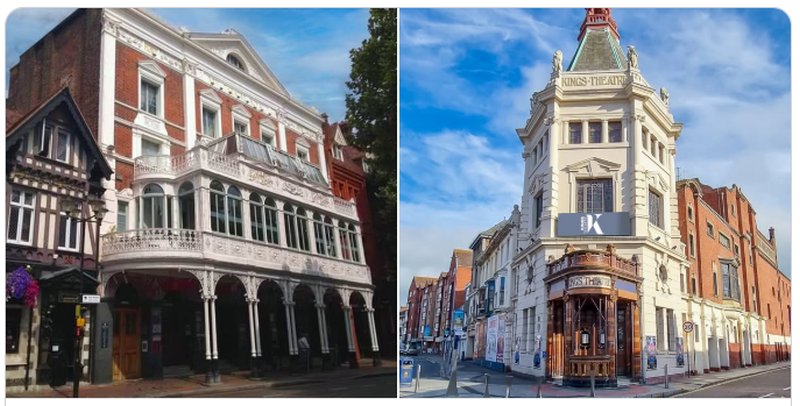
Above - Portsmouth's New Theatre Royal and Kings Theatre, today back in partnership - Courtesy Chris Grant, Kings Theatre, Portsmouth.
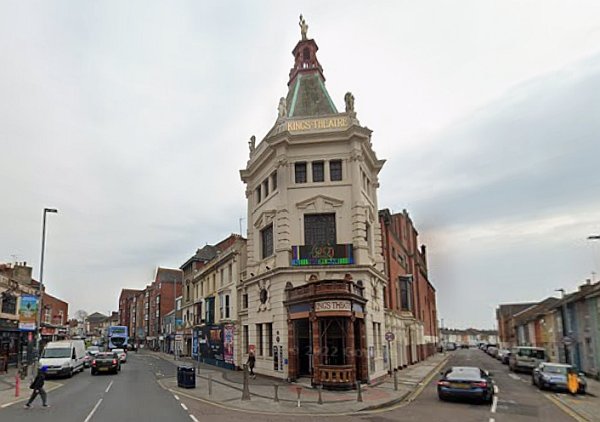 In 2026 work began on building a new Bar, Foyer and Rehearsal Space behind the listed facades of the three shops adjoining the Theatre on Albert Road, as well as providing disabled access to the Dress Circle for the first time in the Theatre's history. A new Studio and Community Space will be situated on the first floor above the present shop fronts.
Right - A Google StreetView Image showing the Kings Theatre, Southsea in March 2022 - Click to Interact.
The Albert Road Facade of the Theatre is to be retained, repaired and restored to its original Victorian glory. The Northern elevation of the building will also be repaired and the original colour scheme reinstated. Five new Toilets including an accessible Toilet will also be added to the Theatre. It is proposed that Theatre operations will remain for the majority of the time that the work is going on.
The King's Theatre is today a Grade 2* Listed building. A detailed history of the Kings Theatre and further details of its restoration can be found on the Theatre's own Website here. There are more photographs of the Theatre from before and after its earlier restorations below.
If you have any more information or images for this Theatre that you are willing to share please Contact me.
Photographs of the Kings Theatre, Southsea in 2000, before its restoration
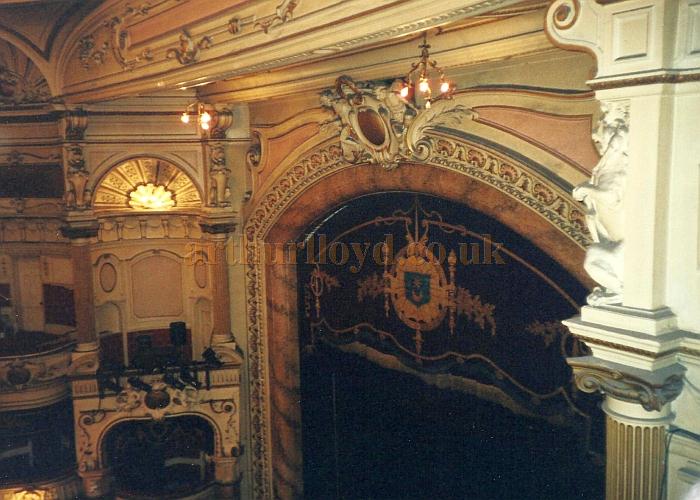
Above - The Proscenium and Auditorium of the Kings Theatre, Southsea in 2000 - Courtesy David Garratt.

Above - The Auditorium of the Kings Theatre, Southsea in 2000 - Courtesy David Garratt.
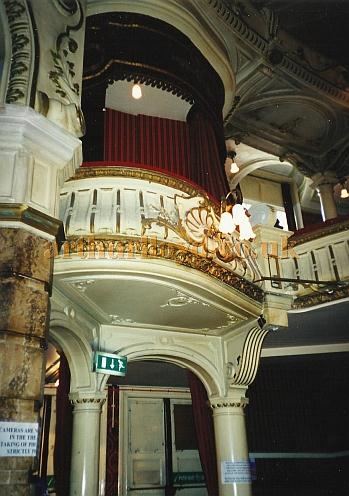
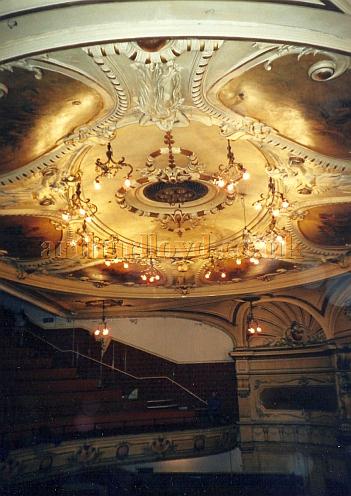
Above - An Auditorium Box and the Ceiling of the Kings Theatre, Southsea in 2000 - Courtesy David Garratt.

Above - The Auditorium of the Kings Theatre, Southsea in 2000 - Courtesy David Garratt.
Post Restoration Photographs of the Kings Theatre, Southsea in 2011

Above - The Foyer of the Kings Theatre, Southsea in 2011 - Courtesy B.F.
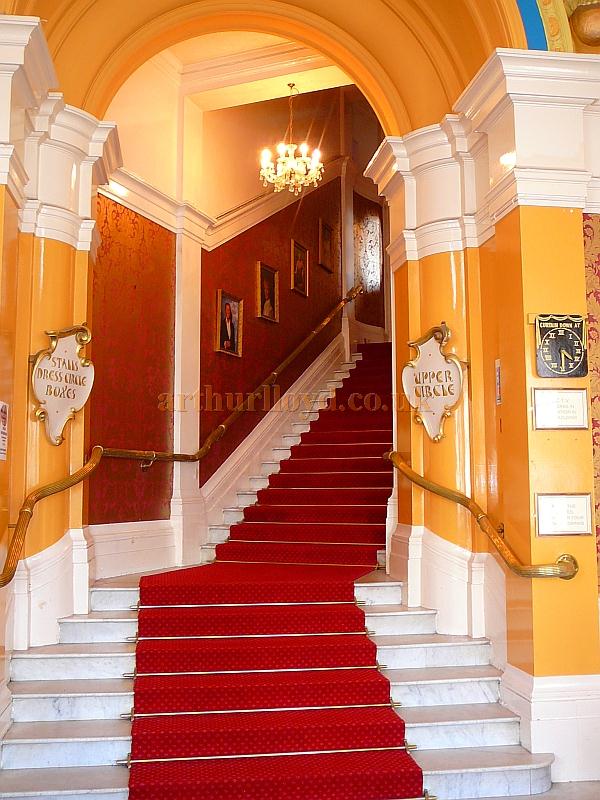
Above - The Stairs to the Stalls, Dress Circle, Boxes, and Upper Circle of the Kings Theatre, Southsea in 2011 - Courtesy B.F.
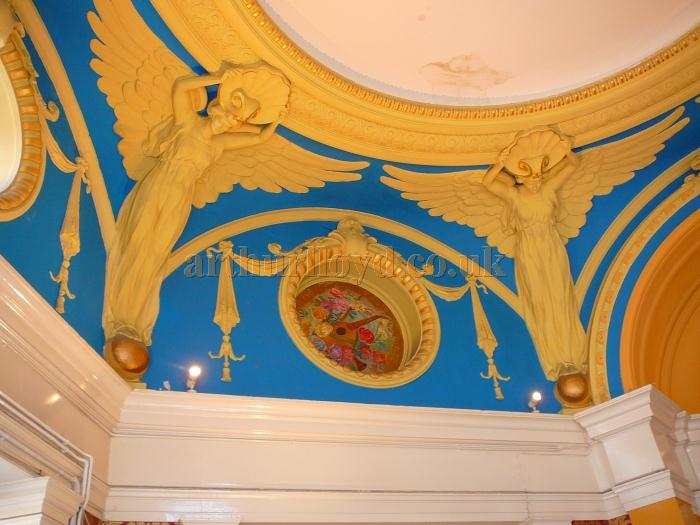
Above - A Detail of the Foyer Ceiling at the Kings Theatre, Southsea in 2011 - Courtesy B.F.
The Southsea Assembly Rooms and Baths

Above - The Southsea Assembly Rooms and Baths - From the Building News and Engineering Journal, 6th of October 1871.
The Building News and Engineering Journal reported on the opening of the Southsea Assembly Rooms and Baths in their 6th of October 1871 edition saying:- 'A popular but comparatively young watering place has just received a finishing stroke in the way of improvement, which enables it to be placed on a par with the older and better-known sea-side resorts in point of artificial convenience, as it already equals them in natural advantages. Indeed, but a few years since, Southsea had all the inherent advantages common to most watering places, but none of those conveniences without which it would be hopeless to expect visitors. It was within an easy distance of London, but had a very defective train service; with a splendid beach, bathing was next to impossible by reason of want of machines; and so on, and on. But gradually all this has been changed. The South Coast or South Western takes us down in a couple of hours; the shingly common has been levelled and turfed, and has a splendid esplanade along the whole length of the shore. These and many other improvements have almost entirely changed the aspect of the place, and now, within the last few months, an undertaking has just been accomplished which cannot fail of good results, both to itself and to Southsea.
The Southsea Baths and Assembly-rooms, to which we refer, and a plan and perspective view of which we illustrate this week, are situated at the extreme west of the common by the side of the new pier, directly facing the sea, and consist of buildings 326 feet in length in the Italian Swiss style. The War Department, on whose property the building was erected, restricted their lessees using either brick or stone in the construction, fearing that a too permanent class of building might, at some future time, possibly interfere with the general plan of the Portsmouth defences. Consequently, with the exception of the engine and boiler-house and water-tower, which are of brick, the whole of the baths and assembly-rooms are constructed of timber, rough cast outside, resting on four feet of brickwork, with four feet layer of concrete under all, and are covered with an iron roof.
The general effect of the buildings, notwithstanding this enforced paucity and poverty of materials, is satisfactory, while the plan and arrangements of the interior of the buildings are very skilfully contrived. The extensive length of the structure is broken into three sections, and is flanked at one end by two lofty Belvidere towers, and at the other end by the water tower and engine chimney. The two end blocks are about 45ft. high, and the. centre block about 50ft. high, each having an ornamental iron and glass skylight 4ft. high, with finials. The Belvidere towers have projecting slate roofs, and have balconies running round them, from which extensive views of the sea, the Isle of Wight, and the country inland can be obtained.

Above - A Plan of the Southsea Assembly Rooms and Baths - From the Building News and Engineering Journal, 6th of October 1871.
So much for the exterior. If we were to make a suggestion, it would be that a light iron balcony or verandah should be added to the sea front, which now presents a somewhat bald appearance. The means of ingress and egress are ample, there being entrances on nearly every side, the principal being at the esplanade end. This leads us to a spacious vestibule opening into the main assembly-room, which occupies nearly the whole of the eastern block, forming a fine saloon 80ft. long by 40ft. wide, with a minstrels' gallery at one end, below which are the vestibule and cloak-rooms. It has a number of French casement windows on either side, opening on to the croquet lawn, and to a terrace on the sea beach respectively.
The wall decoration of the inside of the assembly-room is somewhat Classic in treatment, buff and chocolate brown being the base colours, leading up to blue and white in the roof. This, combined with the open ironwork of the roof and skylight, produce a light and pleasant effect. From the iron roof hang down starlights at the intersections of the trusses.
Two wide passages lead us from the assembly-room to the central block, which comprises the ladies' swimming-bath, with a clear water space of 40ft. by 22ft. 6in., with dressing-boxes fitted up round the bath, a supper-room, billiard and smoking rooms, board-room, manager's apartments, and nine ladies' private baths, which are ranged round in a gallery above the swimming bath.
Lastly, coming to the other end block, we have a fine swimming-bath for gentlemen, being 70ft. long and 22ft. 6in. wide, in clear water space, and having a maximum depth of 7ft. and a minimum depth of 3ft. 6in., with dressing-boxes on either side, and with thirteen private baths arranged in a similar manner to the ladies', with lavatories, &c, attached.
The engine and boiler-house, engineer's apartments, laundry, and drying-closets occupy the extreme end of the buildings. All the baths can be supplied with salt or fresh water, either hot or cold, and strained from all impurities at any time of the day and all through the year. The assembly-room, billiard-room, and corridors are heated by steam pipes, in coils or underneath the floors, and fresh air is introduced through the channels in which the coils are laid; there is communication all over the building by means of electric bells; and, indeed, we find everywhere that marked attention to details which goes so far to securing the success of a structure. There are two five-horse (nominal) engines, with three boilers which have been proved up to 1001b. pressure to the square inch.
The cost of the whole building complete, including engines, fitting, &c, is under £10,000, of which the engine-work generally (by Messrs. Gimson & Co., of Leicester) cost about £1,200. The gas-fittings, which are numerous, well placed, and in good taste, were manufactured by Messrs. D. Hulett & Co., of High Holborn. Mr. Chevallier, of London, executed the decorations, and Messrs. Neave & Fry, contractors, of London and Landport, took the general contract.
The whole of the works were carried out from the designs and under the superintendence of Messrs. Davis & Emanuel, 2, Finsbury-circus, City. Since the opening of the establishment it has been extensively used for swimming matches, concerts, fancy balls, and for public dinners and receptions.'
The above text in quotes was first published in the Building News and Engineering Journal, 6th of October 1871.